

Quick Takeaway
- Identify the documented function before using a part number or visual similarity.
- Record the assembly identity, component marking, and drawing reference before an RFQ.
- Ask the OEM to confirm item identity or suitability; this guide does not authorize substitution.
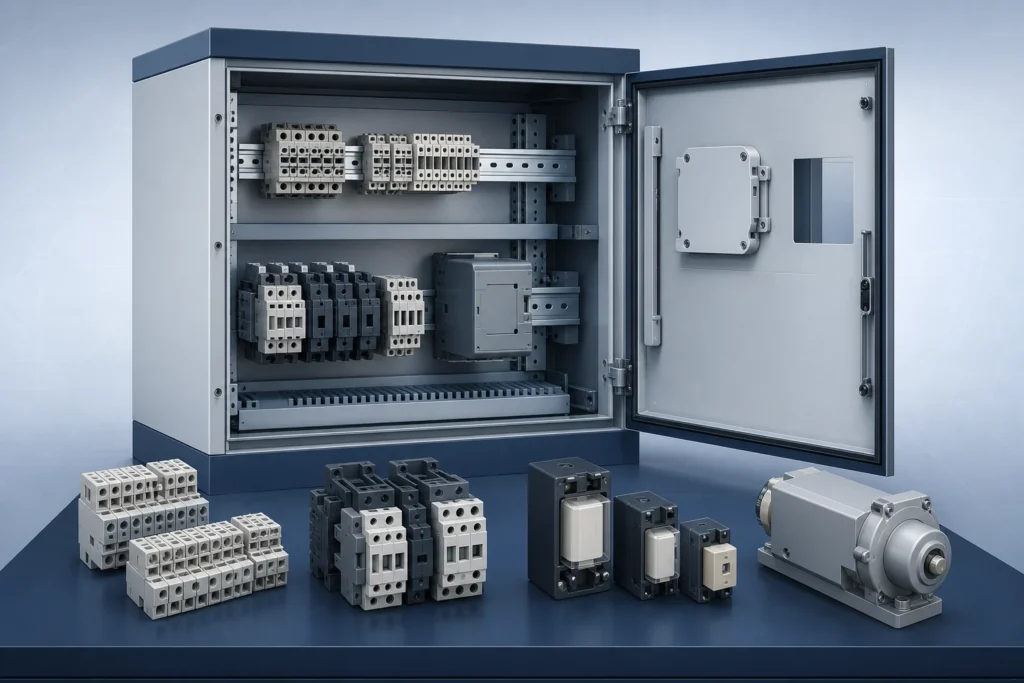
Auxiliary components support the control, signalling, mechanism, environmental, or access functions of a switchgear assembly. Terminal blocks, auxiliary contacts, coils, mechanism motor assemblies, indicators, heaters, and key-interlock items may share a cubicle, but they do not share one universal part identity. An accurate request begins by identifying the item's role in the relevant switchgear auxiliary components record.
This is an identification guide only. It does not provide wiring, adjustment, testing, installation, or replacement instructions.
Why Function Comes Before a Part Number
A part number becomes useful only when it is linked to the correct switchgear assembly, schematic position, and documented function. A legacy label can be incomplete or superseded, and visual similarity is not proof that two items have the same purpose. The first record should therefore answer four questions:
1. What function does the source document assign to the item?
2. Which assembly and cubicle documentation identify it?
3. Which marking, connector reference, or drawing callout is visible?
4. Which OEM source can confirm the catalogue identity?
ABB's Safering/SafePlus documentation distinguishes terminal blocks, auxiliary switches, coils, motor operation, and protection-related items by functional context. That is the appropriate evidence model: document the function within the product family, rather than treating a broad label as a compatibility claim.
A Functional Taxonomy for RFQ Records
| Functional group | What to record | Do not infer |
|---|---|---|
| Terminal and interface blocks | Terminal designation, connector form, drawing page, assembly model | Switching duty or replacement approval |
| Auxiliary contacts | Device marking, contact designation, mechanism reference, schematic callout | Equivalent contact form from appearance |
| Close or trip-related coils | Coil marking, drawing reference, assembly model, stated function | Supply, duty, or role from housing shape |
| Mechanism motor assembly | Motor or assembly marking, mechanism drawing, cubicle model | Output characteristics or interchangeability |
| Indication, heating, access accessories | Label, location, drawing reference, assembly model | That it is a protection or control device |
The outcome should be an evidence-backed description such as “auxiliary contact assembly identified at drawing callout X” or “coil marking captured; function pending OEM confirmation.” It should not be a conclusion that an item is interchangeable.
Terminal and Interface Components
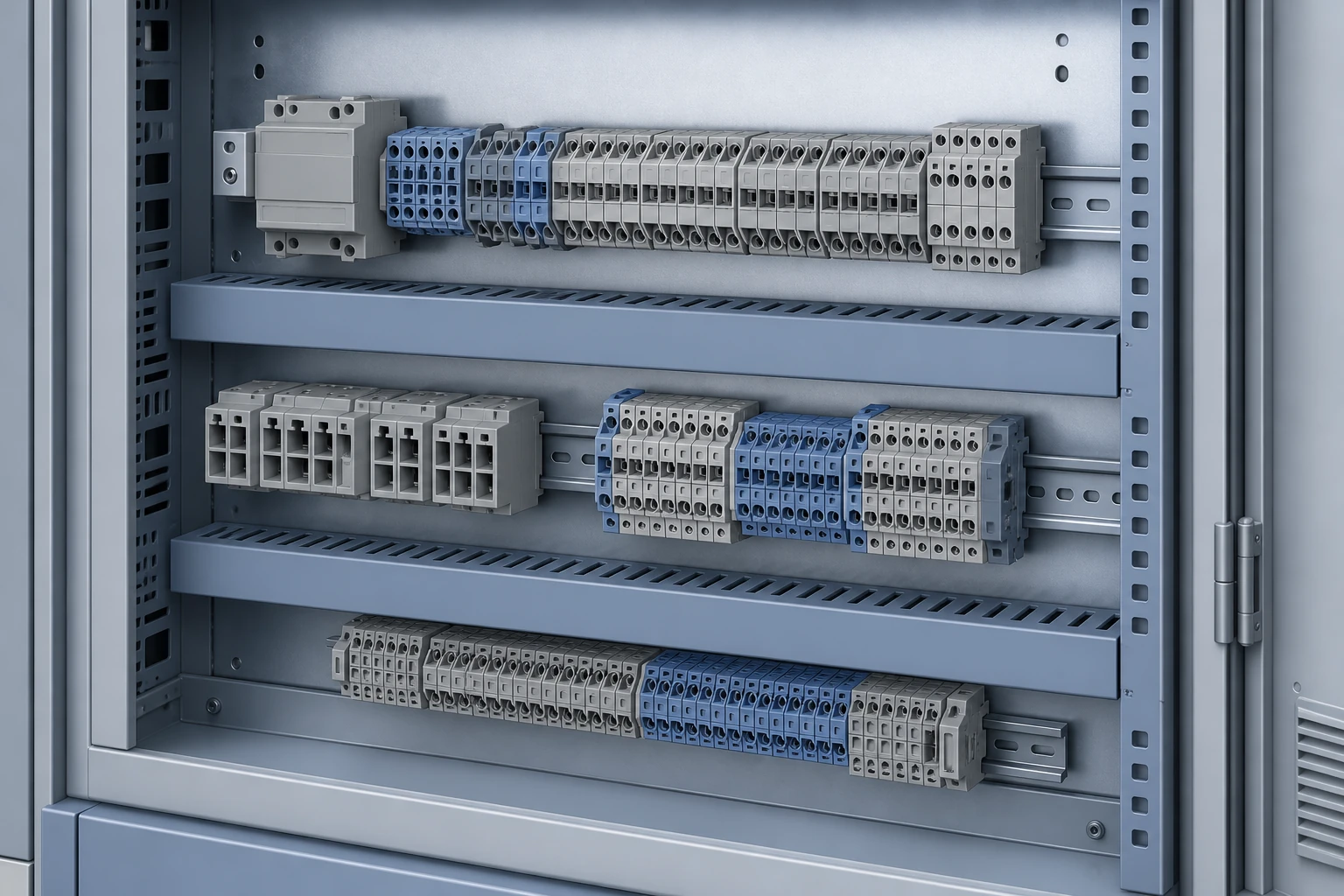
Terminal blocks and interface assemblies organize the documented secondary-circuit connections in a cubicle. Their name normally comes from the terminal schedule, connector designation, or drawing callout. Record the visible marking, relevant drawing reference, connection style, and the switchgear model.
If the available documentation does not establish the role, state that uncertainty in the RFQ. A terminal point and a functional control device can occupy the same low-voltage compartment but require different evidence. The request should seek document clarification or OEM identification rather than name a guessed replacement.
Position, Status, and Interlock Items
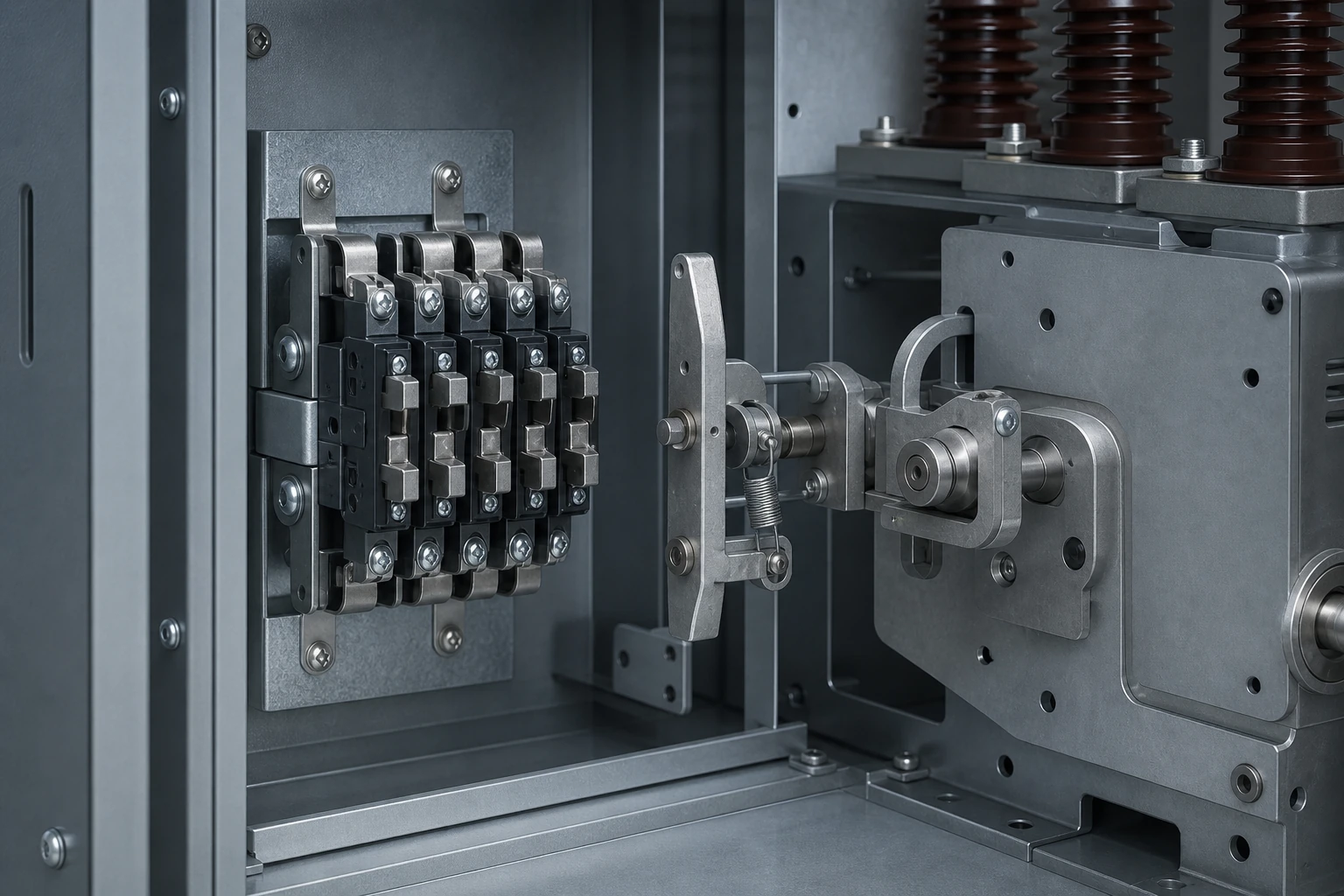
Auxiliary switches and related contact assemblies represent a documented state, position, or interlock function associated with a primary device or mechanism. The broad name “auxiliary switch” is incomplete without the relevant assembly drawing.
For an identification record, retain:
- Switchgear OEM, series, cubicle type, and serial number.
- The item marking and every legible terminal or connector reference.
- The schematic page and callout that names the position, status, or interlock function.
- The primary device or mechanism identified by that source.
This is especially important for medium-voltage switchgear components, whose identities depend on their interfaces within a defined assembly. A drawing callout is evidence for identification; it is not by itself a suitability decision.
Coils and Mechanism-Related Items
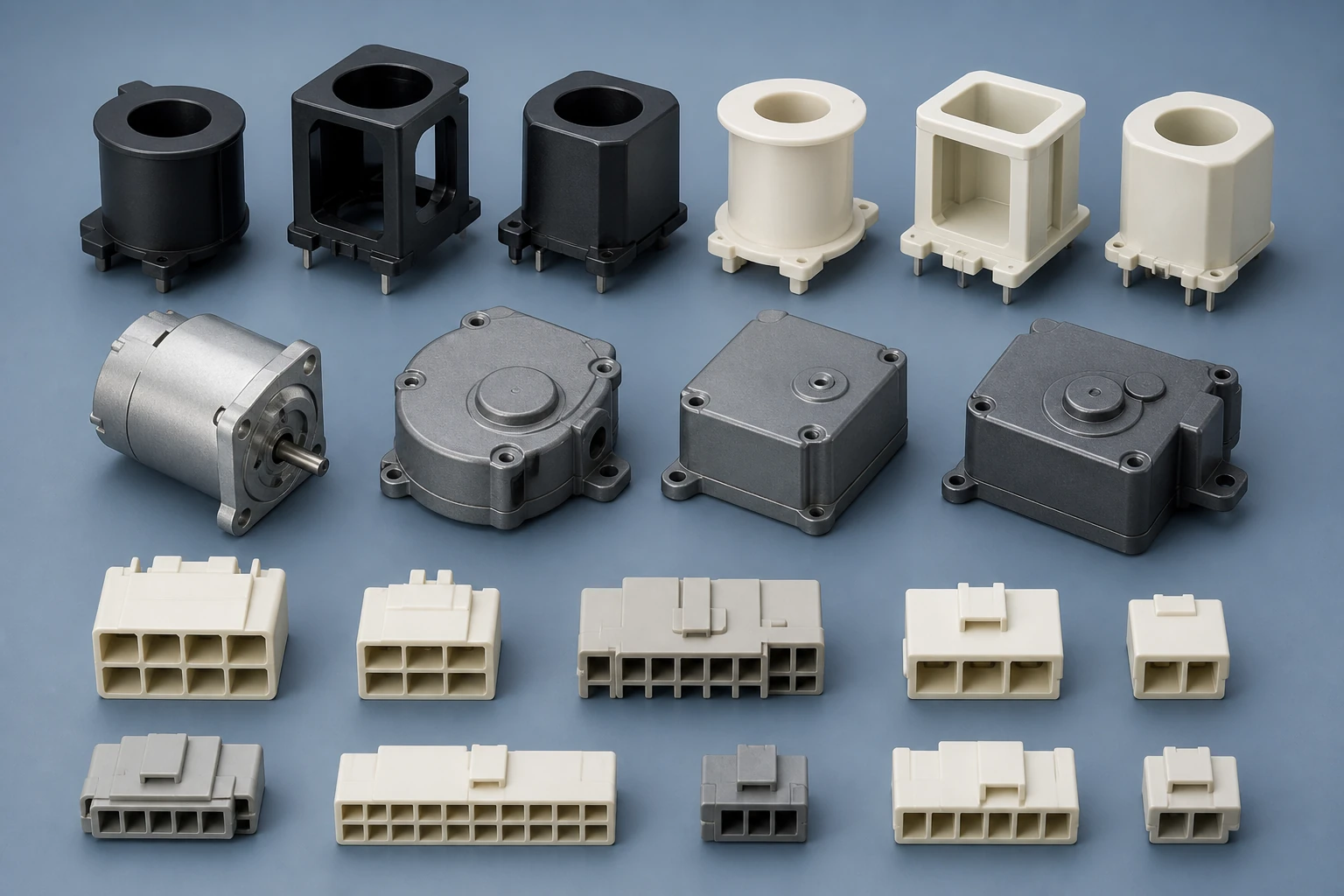
Command-related coils and mechanism assemblies can look similar in photographs. Their role must be read from the exact switchgear and mechanism documentation. The evidence record should include the visible marking, the drawing reference, the assembly model, and the function stated by the OEM.
Where an item belongs to a withdrawable breaker, include the breaker identity and the relevant vacuum circuit breaker documentation reference. This lets the OEM or supplier identify the correct catalogue record without assuming an electrical, mechanical, or performance match.
Indication, Heating, and Access Accessories
Indicators, lamps, panel instruments, anti-condensation heaters, door-related accessories, and key-interlock items are also auxiliary components. They should be separated by documented purpose:
- Local indication or annunciation.
- Environmental conditioning within the cubicle.
- Physical access or key-interlock administration.
- A documented interface with a protection, monitoring, or control system.
Record the accessory group shown in the assembly documentation. If the sources do not identify the item, describe only its visible marking and location rather than assigning a name from a visually similar product family.
IEC Context and Evidence Boundaries
IEC 62271-200 applies to metal-enclosed AC switchgear and controlgear assemblies. Here it provides assembly-scope context only. It does not establish a universal auxiliary-component part number or a generic replacement approval.
For an RFQ, that means:
- A generic auxiliary-component name does not establish the correct item.
- A visual match or partial marking is not proof of approved suitability.
- Any substitution, configuration, or assembly-impact question belongs to the OEM or an authorized engineering authority.
The switchgear nameplate record is the right starting point when the cubicle or product family has not yet been established.
A Function-First RFQ Record
| RFQ field | What to provide | Why it matters |
|---|---|---|
| Assembly identity | OEM, series, cubicle type, serial number, year where shown | Establishes the documentation context |
| Functional group | Terminal/interface, contact, coil, mechanism item, or accessory | Prevents a generic “auxiliary part” request |
| Component evidence | Marking, drawing callout, connector reference, photo reference | Lets the OEM reconcile the evidence |
| Location context | Cubicle/compartment and associated device named in the drawing | Distinguishes similar items in one lineup |
| Document set | Nameplate record, schematic, parts list, GA/order drawing where available | Enables confirmation from source documents |
| Requested outcome | Identification, OEM part-number confirmation, or document clarification | Keeps the request within a clear boundary |
When the function is not fully known, make that explicit: “Function recorded as auxiliary-contact assembly from drawing callout; request OEM confirmation of catalogue identity.” This is more reliable than requesting a same-looking component.
Common Identification Errors
- Treating a shared enclosure style as evidence that two items have the same role.
- Searching a partial part number without the switchgear series or drawing reference.
- Calling every low-voltage compartment item a relay, terminal block, or coil.
- Omitting the functional group from an RFQ.
- Treating a generic catalogue description as approval for a specific assembly.
Each error is avoidable by preserving the function stated in the source document and attaching the supporting drawing or nameplate evidence to the request.
FAQ
What counts as a switchgear auxiliary component?
It is an item that supports the documented control, signalling, protection interface, mechanism, environmental, or access function of a switchgear assembly. Its exact identity comes from the relevant OEM documentation.
How can I identify an auxiliary component when its part number is unreadable?
Record the assembly nameplate, cubicle identity, visible marking, location, connector or terminal reference, and matching drawing callout. Ask the OEM to identify the item from that evidence rather than inferring a replacement.
Are auxiliary switches and terminal blocks interchangeable?
No compatibility conclusion should be made from their location or physical form. They represent different functions in an equipment record; the OEM documentation must resolve any identity or suitability question.
Does IEC 62271-200 approve a generic auxiliary component?
No. IEC 62271-200 concerns the metal-enclosed switchgear assembly. It does not itself establish a universal auxiliary-component part number or replacement approval.
What should an RFQ request when the exact item is unknown?
Request OEM identification or part-number confirmation and attach the assembly identity, visible markings, drawing references, component location, and photographs where available. State the observed functional group without presenting it as a confirmed replacement specification.

