

Quick Takeaway
- Confirm the project duty and applicable requirements for Disconnect Switches before selection or service work.
- Use recorded inspection and test evidence instead of unsupported assumptions.
- Keep the final acceptance, maintenance, and handover documents with the equipment record.
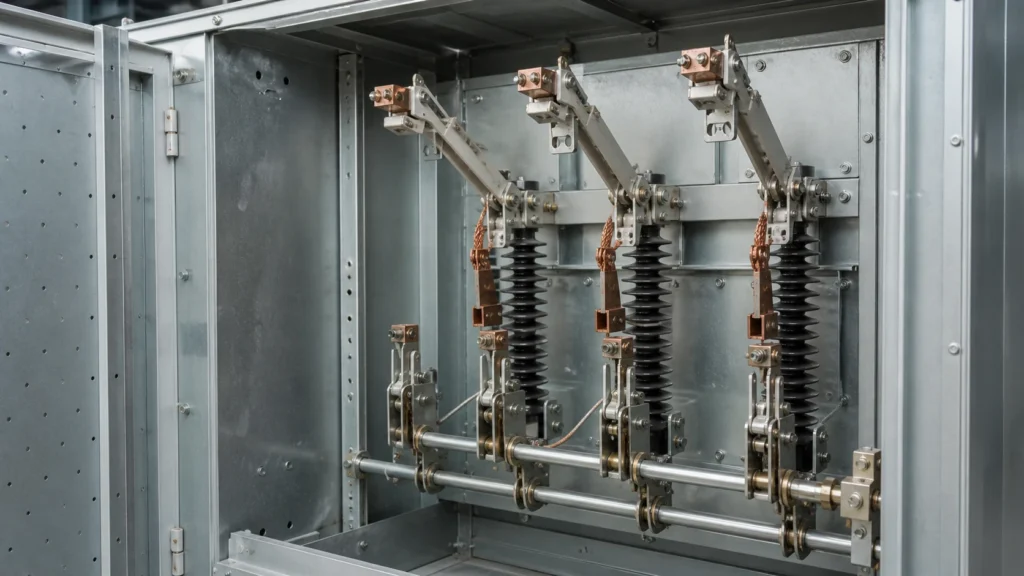
The terms *isolator*, *disconnector*, and *switch-disconnector* describe different functional capabilities, not interchangeable labels for the same device. A disconnector provides a visible isolation gap but is not rated to make or break load current; a switch-disconnector combines that isolation function with a rated load-switching capability. Confusing the two in a specification, replacement order, or single-line diagram can result in a device that either cannot safely interrupt the current it encounters or lacks the certified isolation gap the system requires. Our related guide, Load Break Switch vs Disconnect Switch: Different Operating Roles in MV Switchgear, addresses that operating-role distinction from the equipment-selection perspective.
| Attribute | Disconnector | Switch-Disconnector |
|---|---|---|
| Primary function | Provides a visible isolation gap for de-energised circuits | Provides isolation **and** rated load-current switching |
| Load-current making/breaking | Not rated — circuit must be de-energised first | Rated to make and break load current up to its assigned values |
| Governing standard (MV AC) | IEC 62271-102 (disconnectors and earthing switches) | IEC 62271-103 (switches) in combination with IEC 62271-102 isolation requirements |
| Typical position in a switchgear lineup | Upstream or downstream of a circuit-breaker, used only after the breaker has cleared the load | Can serve as the primary switching and isolating device in distribution feeders, transformer circuits, or ring-main units |
| Risk of misapplication | Device may be destroyed or arc may be sustained if operated under load | Oversizing cost, or specifying a device whose isolation gap rating does not match the system voltage |
Why the Terminology Diverges Across Regions and Catalogues
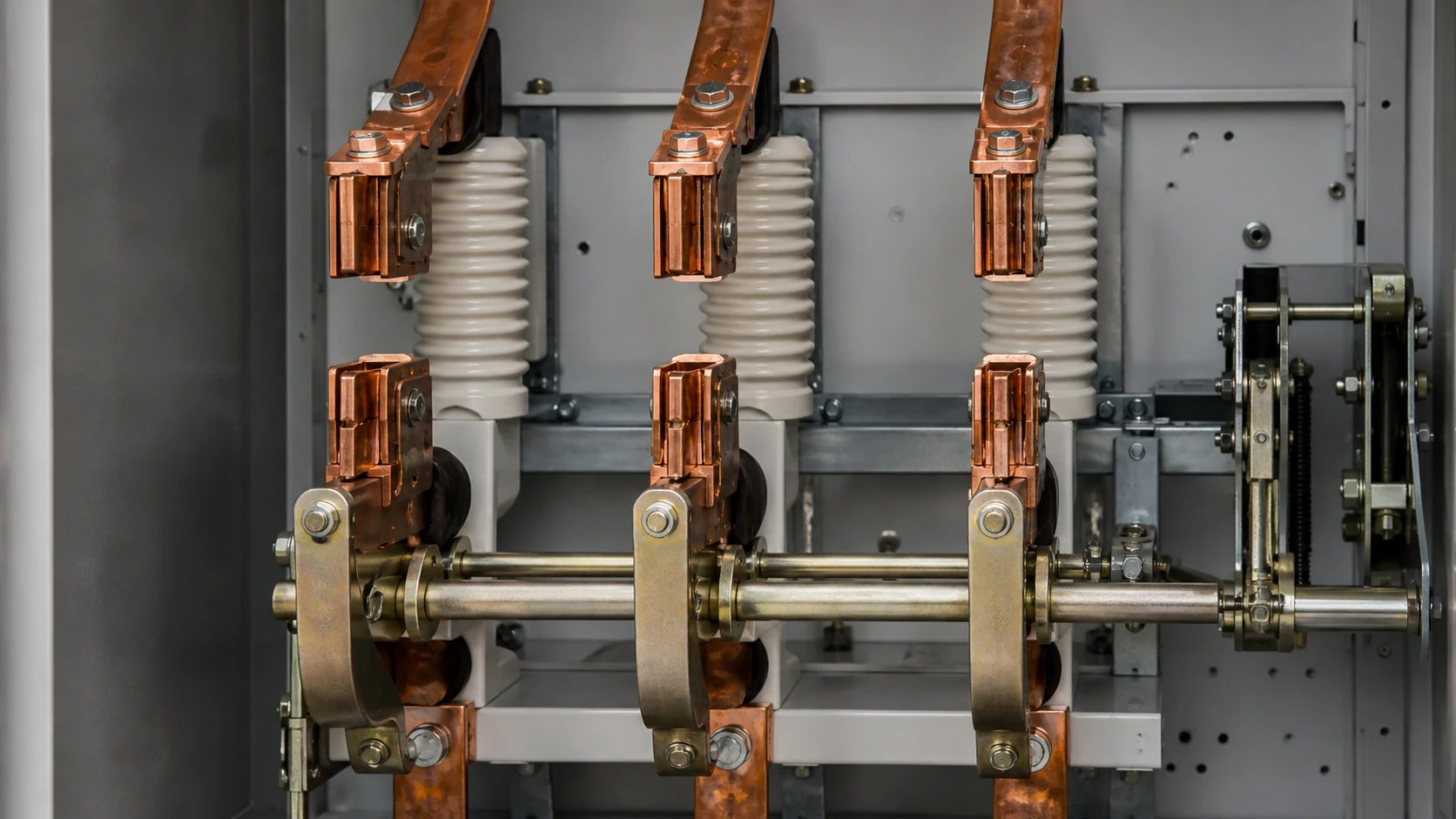
The word *isolator* is the source of most confusion. In IEC vocabulary and in most of Europe, the formal term is *disconnector*. British, Australian, and South African practice historically favoured *isolator* for the same device. North American usage sometimes applies *disconnect switch* or simply *disconnect* to devices that may or may not carry a load-switching rating, depending on the product standard referenced (ANSI/IEEE versus IEC). None of these regional habits change the physics: what matters is whether the device has been tested and rated to interrupt load current, or only to provide an isolation gap once current has been interrupted by another device.
A catalogue short-name makes this worse. ABB's medium-voltage GSec and GSec Air family, for example, can be configured either as a switch-disconnector or as a disconnector, with different stated ratings in each configuration. Selecting solely from the product-family name — or from a one-line catalogue entry — without confirming the specific configuration and its rated duties would risk ordering a disconnector where a switch-disconnector is required, or the reverse. The exact documented function must be confirmed from the product datasheet and the ordering code, not inferred from a short commercial name.
The Functional Boundary Defined by IEC 62271-102
IEC 62271-102:2022 governs alternating-current disconnectors and earthing switches for rated voltages above 1 kV, covering both indoor and outdoor installations. The standard anchors the terminology boundary this article relies on: a *disconnector* is a mechanical switching device that provides an isolating distance in the open position and is designed to be operated only when negligible current is to be interrupted or made, or when no significant voltage change across its terminals occurs. An *earthing switch*, also covered by the same standard, connects a de-energised circuit to earth.
This definition sets a hard functional limit. A disconnector tested and certified to IEC 62271-102 alone has no obligation to interrupt load current safely. Any rated making or breaking duty beyond negligible current — bus-transfer current, magnetising current, or capacitive charging current — must be explicitly stated and tested per the relevant clauses. If the application requires load-current switching, the device must additionally satisfy the switch requirements of IEC 62271-103, at which point it earns the combined designation *switch-disconnector*. See the Load Break Switches category for the product-side context, while keeping the final functional classification model-specific.
How the Same Hardware Platform Can Carry Two Different Ratings
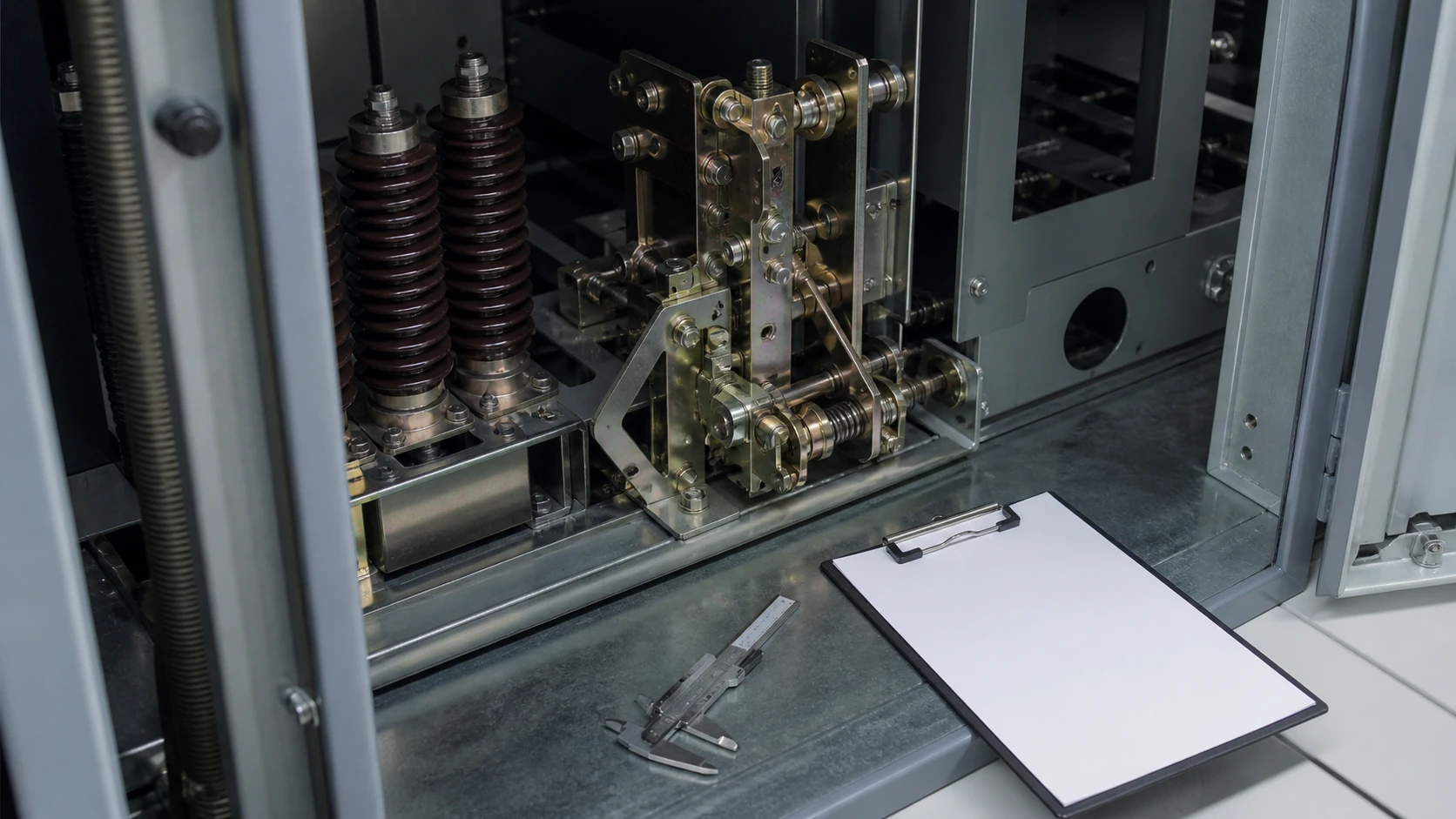
A single mechanical platform can sometimes be configured, adjusted, or fitted with arc-control components to qualify either as a disconnector or as a switch-disconnector. The ABB GSec and GSec Air medium-voltage range is a documented example: the same product family offers both configurations, but each carries different rated values and references different portions of the applicable IEC standards. This design approach is efficient for the manufacturer and convenient for the panel builder, yet it creates a procurement trap.
When a replacement device is ordered by product-family name alone, the configuration delivered may not match the duty the original device was performing. A facility that replaces a switch-disconnector with the same-family disconnector variant loses the ability to switch load current and may expose operators to an unrated interruption attempt. The reverse substitution — replacing a disconnector with a switch-disconnector — is usually safer electrically but may introduce dimensional, interlock, or cost differences that were not anticipated.
The practical defence is straightforward: every specification, purchase order, and replacement request must state the required switching duty and the applicable standard clause, not just the product family or catalogue name.
Reading a Nameplate and Datasheet to Confirm the Functional Category
The nameplate of a correctly marked device will show, at minimum, its rated voltage, rated normal current, and — if it is a switch-disconnector — its rated making and breaking currents for load switching. A device that only shows a rated short-time withstand current and a rated peak withstand current, with no load-switching values, is almost certainly a disconnector only.
Key datasheet fields to verify before any procurement or replacement decision:
- **Rated voltage (Ur)** — must equal or exceed the system voltage.
- **Rated normal current (Ir)** — the continuous current the device can carry in the closed position. Both disconnectors and switch-disconnectors carry this rating.
- **Rated short-circuit making current (Ima)** — the peak current the device can close onto during a fault. Present on both categories but does not imply load-switching capability.
- **Rated load-switching current (Iload, making and breaking)** — present only on switch-disconnectors. Absence of this value confirms the device is a disconnector.
- **Standard reference** — IEC 62271-102 alone indicates a disconnector or earthing switch. A dual reference to IEC 62271-102 and IEC 62271-103 (or an integrated product standard that covers both) indicates a switch-disconnector.
If any of these fields is missing, illegible, or ambiguous, the correct response is to request the full type-test report or a written confirmation from the OEM, not to assume the higher or lower rating.
Selection and Verification Workflow Before an RFQ or Replacement
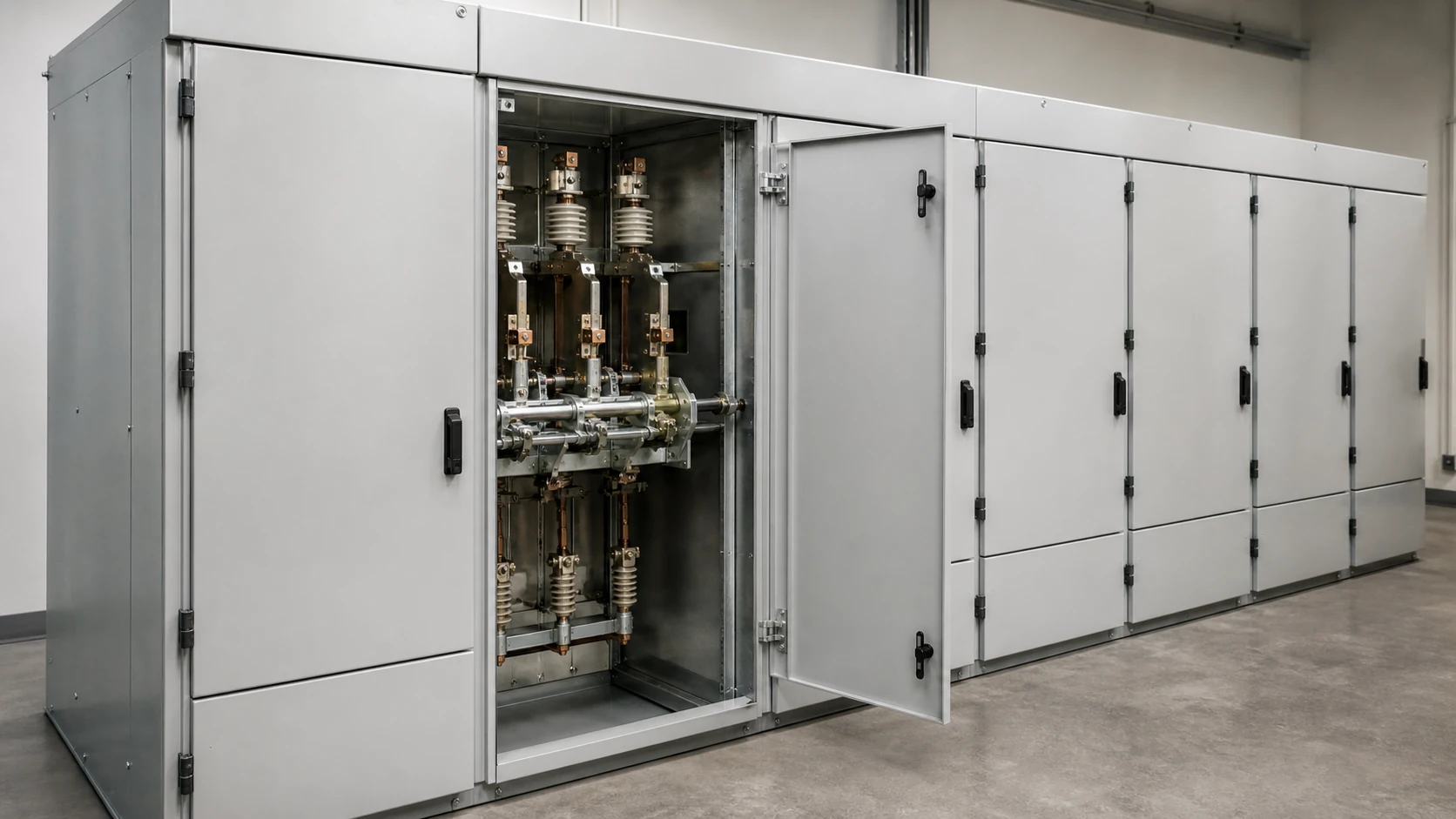
Rather than maintaining separate checklists for selection, procurement, and verification, the following single workflow covers the data that must be resolved before a request for quotation is issued or a replacement device is ordered.
**Step 1 — Establish the required switching duty.** Determine from the single-line diagram and the protection coordination study whether the device must switch load current, serve only as an isolation point downstream of a breaker, or provide an earthing function. This step determines the functional category.
**Step 2 — Record the system parameters.** Rated system voltage, maximum continuous current, prospective short-circuit current at the installation point, BIL/SIL if applicable, and any bus-transfer or capacitive switching duties. This inquiry data sits within the wider MV Switching Equipment context; it is not a substitute for design approval.
**Step 3 — Confirm the functional designation in the specification.** Write "switch-disconnector per IEC 62271-102 and IEC 62271-103" or "disconnector per IEC 62271-102" explicitly. Do not rely on the word *isolator* alone; it does not resolve the load-switching question.
**Step 4 — Cross-check the offered product.** When a manufacturer responds with a specific product and configuration, verify that the datasheet values for rated load-switching current (if required) match or exceed the duty established in Step 2. For product families like the ABB GSec/GSec Air that offer both configurations, confirm the ordering code maps to the correct variant.
**Step 5 — Verify dimensional and interlock compatibility.** A replacement device must fit the existing panel cutout, busbar spacing, and interlock scheme. Switch-disconnectors and disconnectors from the same family may differ in depth, operating-mechanism travel, or auxiliary-switch count.
**Step 6 — Retain the evidence chain.** File the datasheet, type-test certificate reference, and ordering confirmation together. This documentation is the basis for future replacement decisions and for demonstrating compliance during audits.
Common Failure Modes When Terms Are Confused
**Operating a disconnector under load.** The most dangerous misapplication. Without arc-control features, the disconnector's contacts may draw a sustained arc when load current is present, leading to thermal damage, phase-to-phase faults, or arc-flash events. This scenario typically arises when an operator or procedure treats a disconnector as a switch-disconnector because both devices look similar in the open and closed positions.
**Specifying a switch-disconnector where only isolation is needed.** Less dangerous but costly. The switch-disconnector's arc-control components increase price and may require more frequent inspection. In some designs the additional mechanism reduces the isolating distance or introduces an interlock dependency that complicates maintenance.
**Ordering by family name without specifying configuration.** As discussed with the ABB GSec example, a purchase order that names only the product family risks delivering the wrong variant. The receiving inspection may not catch the difference if the external enclosure is identical and only the internal arc-control arrangement differs.
**Assuming regional terminology aligns with functional rating.** A document that specifies an "isolator" may intend a disconnector (no load switching) in one jurisdiction and a load-break device in another. The only reliable resolution is to state the switching duty and the applicable standard clause explicitly.
When to Escalate to the OEM or a Specialist
Not every terminology question can be resolved from publicly available datasheets. Escalate to the original equipment manufacturer or a qualified switchgear specialist when:
- The nameplate is missing, damaged, or illegible and the internal drawings do not identify the device variant.
- The existing device was installed before the current edition of IEC 62271-102 and its original rating basis is unclear.
- The application requires a duty not clearly covered by the datasheet — for example, switching of capacitor banks, back-to-back capacitor switching, or reactor switching — where specific test evidence is needed.
- The replacement must fit a panel from a different manufacturer, and interlock or dimensional compatibility cannot be verified from catalogue data alone.
Model-specific approved procedures govern all installation, commissioning, gas-handling, adjustment, and live-operation tasks. This article addresses only the terminology, evidence, and selection boundary; it does not replace the OEM's certified operating instructions.
FAQ
What is the difference between an isolator and a disconnector?
In IEC terminology, a disconnector is the formal designation for a mechanical switching device that provides a visible isolation gap in the open position but is not rated to interrupt load current. The word *isolator* is an informal synonym used predominantly in British, Australian, and South African engineering practice. The two terms refer to the same functional category. Whenever a specification uses the word *isolator*, it should also state the applicable IEC standard clause and the required switching duty to eliminate ambiguity.
What is the functional difference between a disconnector and a switch-disconnector?
A disconnector is designed to be operated only when negligible current flows through it or when no significant voltage change exists across its terminals; the circuit must be de-energised by another device — typically a circuit-breaker — before the disconnector is opened. A switch-disconnector adds a rated load-current making and breaking capability to the isolation function, allowing it to open and close circuits carrying load current up to its assigned rating. The distinction is defined by the rated switching duties documented on the nameplate and datasheet, anchored to IEC 62271-102 for the disconnector function and IEC 62271-103 for the switching function.
What is the risk of using the wrong term in a purchase order?
If a purchase order specifies a disconnector when the application requires load-current switching, the delivered device will lack the arc-control features and rated breaking capacity needed to interrupt load current safely. Operating it under load can produce a sustained arc, thermal damage, and potentially an arc-flash event. Conversely, ordering a switch-disconnector for a position that only requires isolation adds unnecessary cost and may introduce mechanical or dimensional incompatibilities. Product families such as the ABB GSec and GSec Air offer both configurations under the same commercial name, so the ordering code and functional designation — not just the family name — must be specified.
What is the correct way to specify the device in an RFQ?
State the full functional designation — "disconnector per IEC 62271-102" or "switch-disconnector per IEC 62271-102 and IEC 62271-103" — along with the rated voltage, rated normal current, required load-switching current (if applicable), rated short-time withstand current, and any special duties such as capacitive or magnetising current switching. Avoid using the word *isolator* as the sole descriptor. Include the panel or switchgear designation so the manufacturer can verify dimensional and interlock compatibility.
What is the standard that governs MV disconnectors?
IEC 62271-102:2022 governs alternating-current disconnectors and earthing switches for rated voltages above 1 kV. It applies to both indoor and outdoor installations. For devices that also perform load-current switching, IEC 62271-103 provides the additional switch requirements. A device designated as a switch-disconnector must satisfy the requirements of both standards.

