

Quick Takeaway
- Confirm the project duty and applicable requirements for Load Break Switches before selection or service work.
- Use recorded inspection and test evidence instead of unsupported assumptions.
- Keep the final acceptance, maintenance, and handover documents with the equipment record.
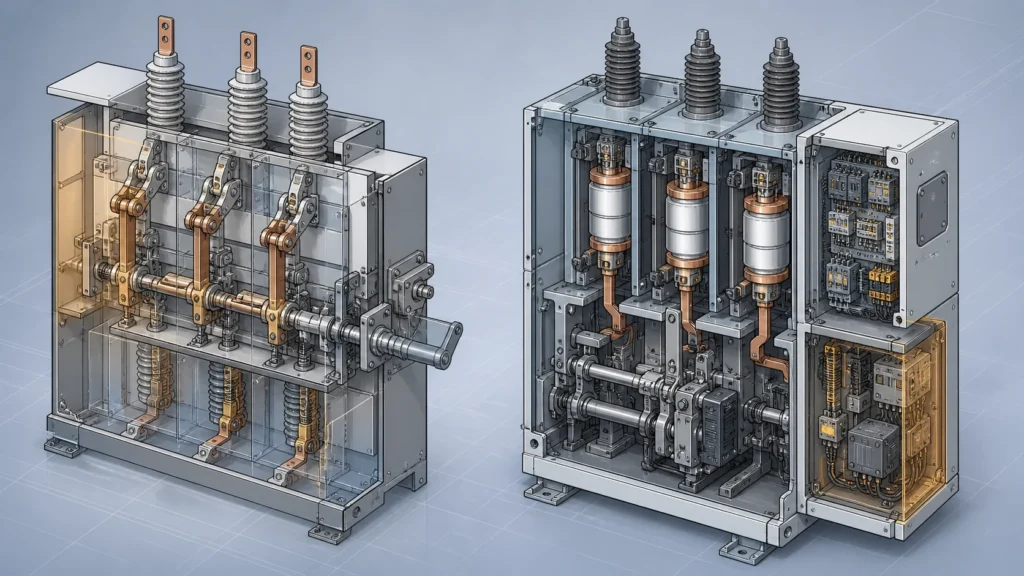
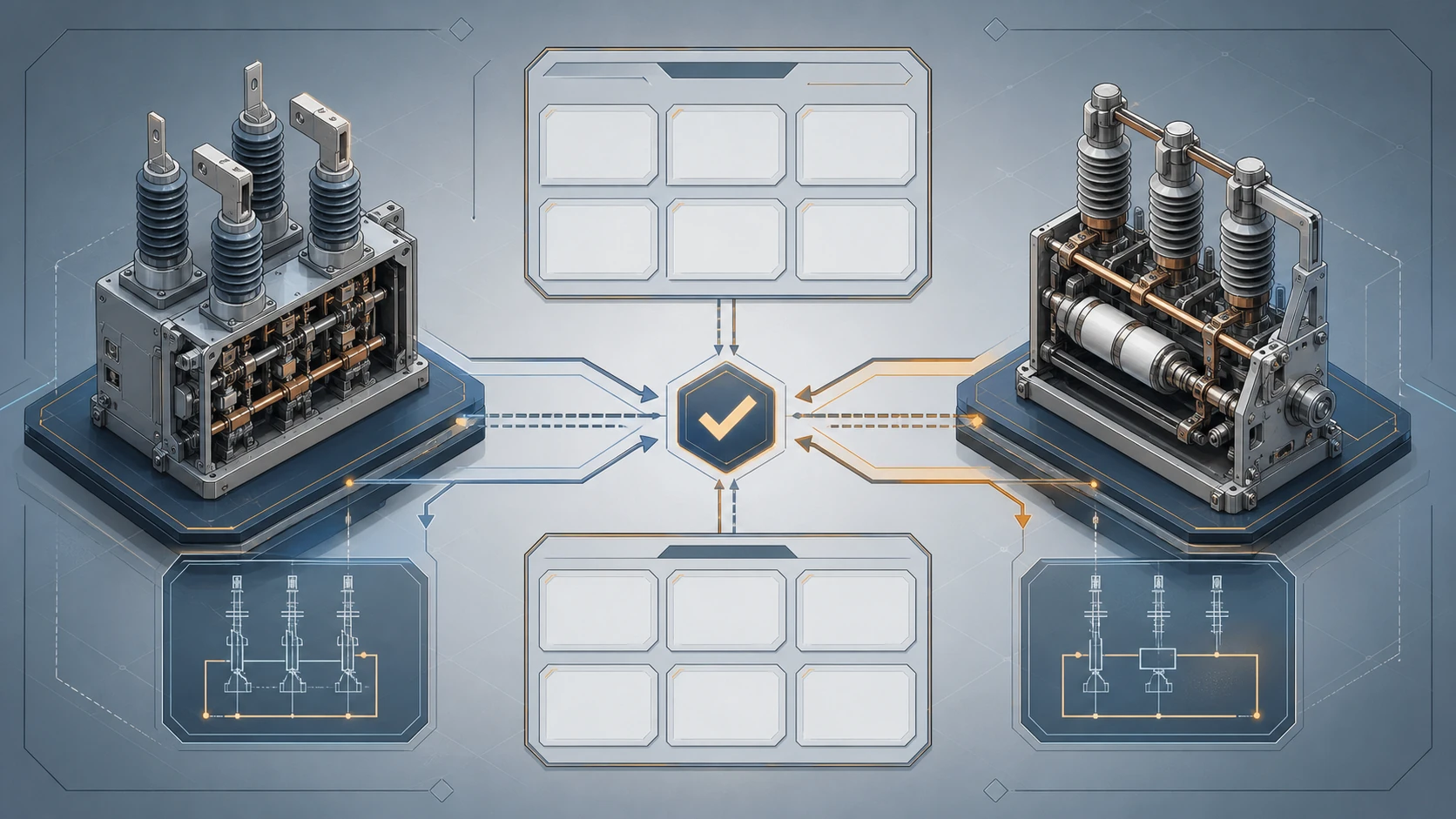
A load break switch makes, carries, and interrupts current at rated load levels, while a vacuum circuit breaker interrupts fault current up to its rated short-circuit capacity. The distinction is one of duty, not quality: each device protects a different boundary in the medium-voltage network, and specifying the wrong one leaves either a protection gap or unnecessary cost. Getting the inquiry data right before an RFQ means knowing which duty you actually need and which evidence the supplier must return through the Load Break Switches selection context.
| Decision dimension | Load break switch | Vacuum circuit breaker |
|---|---|---|
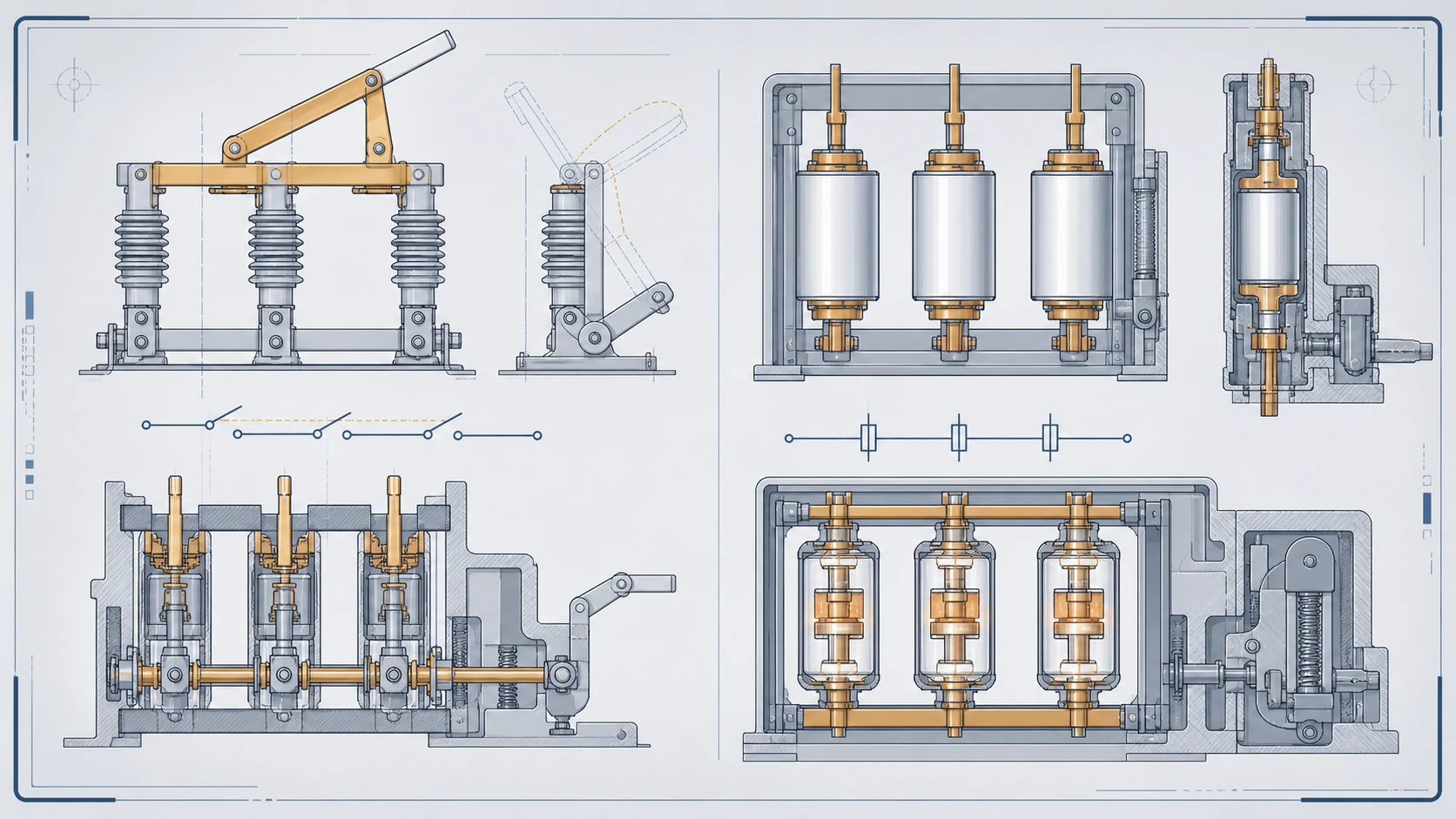
| Primary duty | Make, carry, and interrupt rated load current | Make, carry, and interrupt rated short-circuit current |
| Fault-current role | Withstands momentary fault current; does not interrupt it | Interrupts prospective fault current within rated capacity |
| Arc-interruption medium | SF₆ puffer, hard gas, or vacuum (model-dependent) | Vacuum interrupter (embedded pole) |
| Typical MV application | Transformer or feeder isolation under load, ring-main switching | Bus-section and feeder protection, capacitor bank switching, motor protection |
| Protection relay interface | Usually none; may accept a shunt-trip for remote load transfer | Integral or external relay interface with trip-coil wiring |
| Relevant standards family | IEC 62271-103 (switch-disconnectors) | IEC 62271-100 (circuit breakers) |
| Typical inquiry lead time | Shorter; fewer factory tests | Longer; type-test and routine-test dossier required |
Why the Duty Boundary Matters for Procurement
Procurement teams sometimes treat load break switches and vacuum circuit breakers as interchangeable medium-voltage switching devices. They are not. ABB identifies vacuum interrupters as core components of circuit breakers and separately describes switch-disconnectors as equipment that makes, carries, and interrupts rated load current. That separation is the entire decision axis.
A load break switch is designed around the load-current envelope. It can close onto a fault and withstand the resulting current for a rated duration, but it relies on an upstream protective device to actually clear the fault. A vacuum circuit breaker owns the fault-clearing duty itself: its vacuum interrupters extinguish the arc at current zero within the contact gap, and its operating mechanism delivers the energy and speed needed to separate contacts under short-circuit stress.
Specifying a load break switch where a circuit breaker is required exposes the installation to uncleared faults. Specifying a circuit breaker where a load break switch suffices adds cost, panel space, relay engineering, and maintenance scope that deliver no protective benefit. The procurement question is always: does this point in the network need to interrupt fault current, or only load current?
Interruption Mechanism and What It Implies
The vacuum interrupter inside a circuit breaker is a sealed, evacuated envelope containing a fixed and a moving contact. When the contacts part under fault current, an arc forms in the vacuum. Because there is essentially no ionizable medium, the arc extinguishes rapidly at the next current zero and the dielectric strength across the gap recovers almost instantly. ABB identifies vacuum interrupters as the core component that gives circuit breakers their short-circuit interruption capability.
A load break switch may use a variety of arc-control techniques — puffer-type SF₆ chambers, hard-gas-generating ablative inserts, or in some designs a smaller vacuum interrupter rated only for load-level arcs. The mechanism is sized for the thermal and dielectric stress of load current, not the orders-of-magnitude-higher energy of a bolted fault.
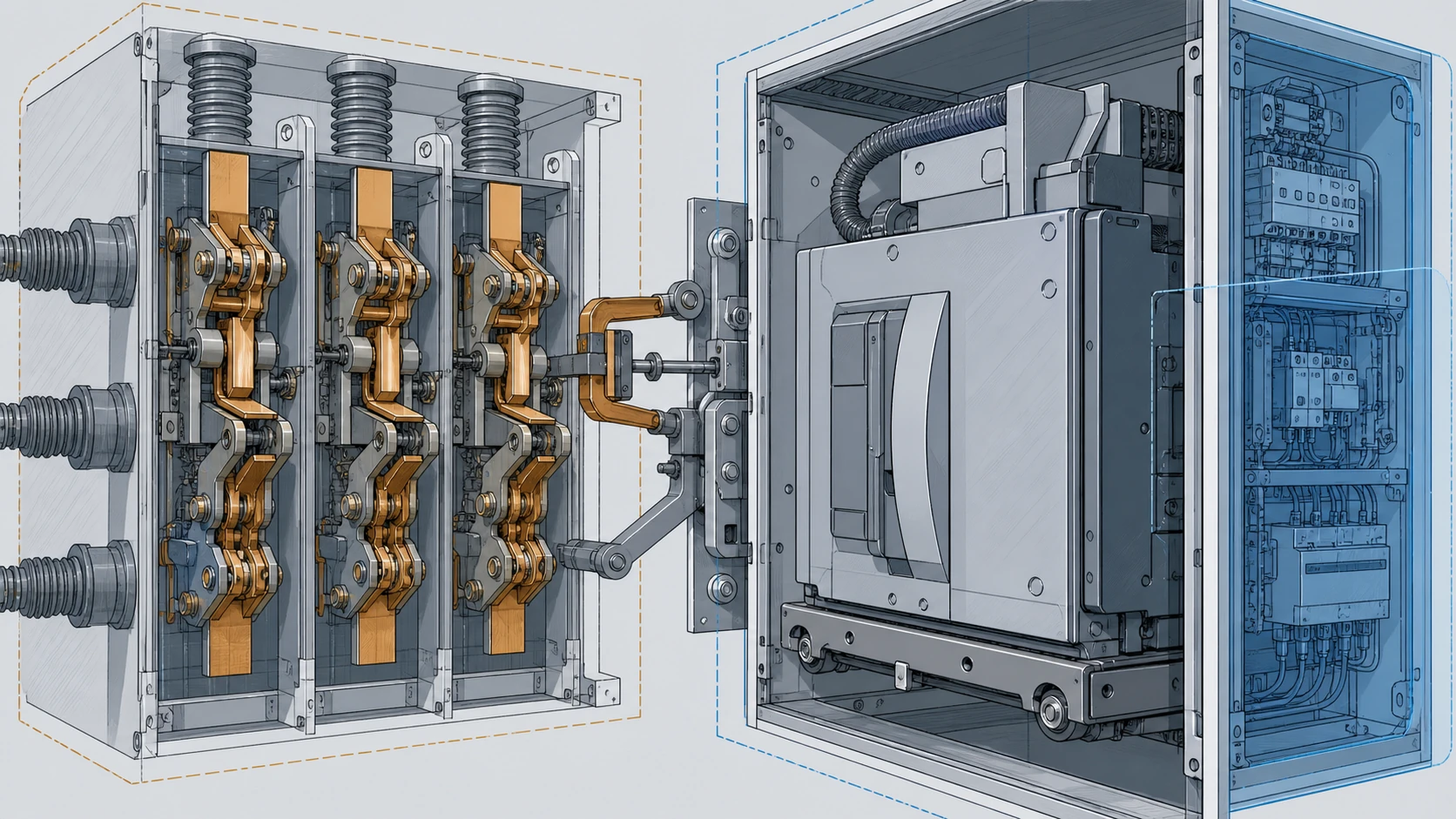
This difference cascades into mechanical design. A vacuum circuit breaker needs a stored-energy or spring-charged operating mechanism capable of delivering high-speed open-close-open sequences. A load break switch typically uses a simpler manual or motor-driven mechanism with a slower contact velocity, because the arc energy at load current is far lower. The mechanical complexity gap drives differences in maintenance intervals, spare-parts inventory, and commissioning scope.
Standards and Evidence Boundaries
IEC 62271-103 governs switches, disconnectors, and switch-disconnectors for alternating-current voltages above 1 kV. It defines the making and breaking duties for load current and the short-time withstand for fault current, but it does not define a short-circuit breaking duty. IEC 62271-100 governs circuit breakers and defines short-circuit making and breaking duties, including the test-duty sequences (T10, T30, T60, T100) that prove a breaker can interrupt progressively higher percentages of its rated short-circuit current.
For procurement, the practical consequence is that the type-test reports you receive with each device prove different things. A load break switch type-test report demonstrates rated load-current interruption and short-time fault-current withstand. A circuit breaker type-test report demonstrates rated fault-current interruption across the full duty-cycle sequence.
When evaluating supplier responses to an RFQ, check which standard the offered equipment is tested to. A device tested only to IEC 62271-103 cannot be placed at a point in the network where fault-current interruption is required, regardless of its voltage and current ratings. Conversely, demanding IEC 62271-100 compliance for a load-switching point inflates cost and lead time with no protective gain.
Switchgear Interface and Panel Dependencies
Load break switches and vacuum circuit breakers occupy different functional positions inside a switchgear assembly, and those positions carry different interface requirements.
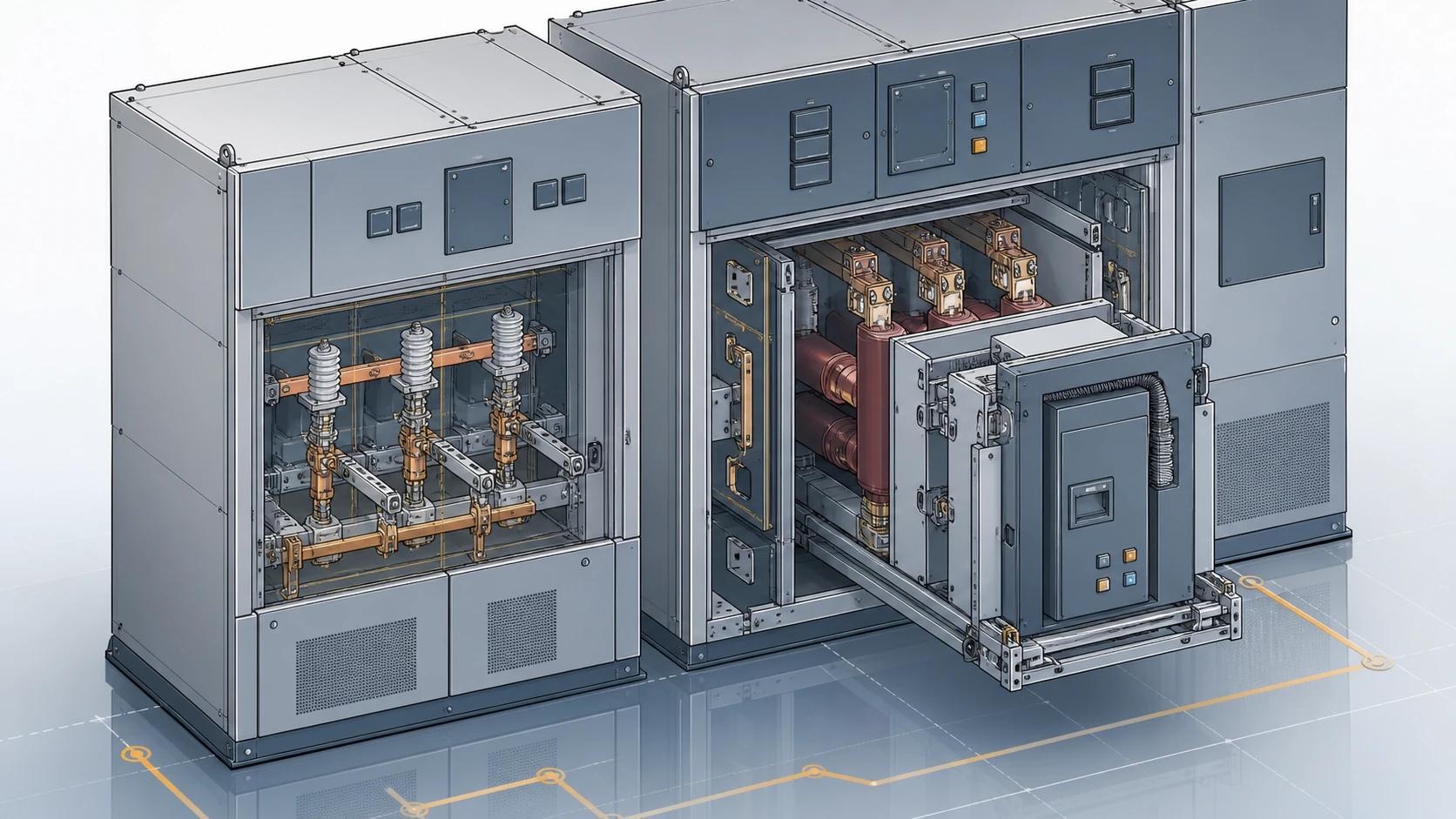
A vacuum circuit breaker panel typically includes a withdrawable truck or cassette mechanism, primary isolating contacts, a secondary plug connector for relay and trip-coil wiring, earthing provisions, and interlocks that enforce an isolation-before-access sequence. ABB presents primary vacuum circuit breakers as protection equipment for medium-voltage distribution, and the surrounding switchgear must support the breaker's operating-mechanism power supply, relay communication, and mechanical interlock logic. Confirm those records against the relevant Vacuum Circuit Breakers family.
A load break switch panel is usually simpler. The switch may be fixed-mounted or in a sealed compartment with a manual or motor-driven operating handle. There is no trip coil to wire, no relay to configure, and no secondary plug. Interlocks still enforce safe access, but the interlock logic is less complex because there is no protection relay state to coordinate.
This means that replacing a load break switch with a vacuum circuit breaker (or vice versa) in an existing switchgear lineup is rarely a drop-in change. The panel dimensions, bus-bar connections, interlock cam profiles, and secondary wiring differ. Any substitution requires the switchgear manufacturer's confirmation that the new device is dimensionally and electrically compatible with the existing panel.
Selection Workflow: Matching Duty to Network Position
Before selecting either device, gather three pieces of network data.
First, determine the rated load current at the switching point. Both devices must carry this current continuously, so it sets the minimum thermal rating. Second, obtain the prospective short-circuit current at the switching point from the network study. This value determines whether a device at this location must interrupt fault current or only withstand it. Third, identify the protection philosophy upstream and downstream: is there an upstream breaker that will clear faults passing through this point, or must this device clear them itself?
If the switching point is a radial feeder to a transformer and an upstream breaker provides fault protection, a load break switch satisfies the duty. It isolates the transformer under load for maintenance and withholds fault current long enough for the upstream breaker to trip. If the switching point is a bus section, a main incomer, or a feeder with no upstream fault-clearing device, a vacuum circuit breaker is required.
Ring-main units present a common hybrid case. The ring switches are load break switches that allow load-current transfer between feeders, while the transformer feeder position may be a fuse-switch combination or a vacuum circuit breaker, depending on the transformer rating and the utility's protection scheme. Confusing the two positions in an RFQ is a frequent procurement error within the broader MV Switching Equipment context.
Inquiry Data Checklist for an RFQ
Sending incomplete inquiry data delays quotation, invites misquotation, and can result in receiving the wrong device class entirely. The data needed differs by device duty.
For a load break switch inquiry, provide: system voltage and insulation level (kV, BIL), rated normal current (A), rated short-time withstand current and duration (kA, seconds), switching duty (load transfer, transformer magnetizing current, cable charging current, or a combination), ambient temperature range, altitude if above 1 000 m, mounting arrangement (fixed, extensible, or withdrawable), operating mechanism type (manual, motor, or both), and the switchgear manufacturer and panel designation if the switch will be installed in existing equipment.
For a vacuum circuit breaker inquiry, provide all of the above plus: rated short-circuit breaking current (kA), rated operating sequence (e.g., O–0.3 s–CO–3 min–CO), protection relay type and communication protocol, trip-coil voltage and auxiliary supply voltage, CT and VT requirements if integrated, and the required type-test duty class per IEC 62271-100. ABB presents primary vacuum circuit breakers with product-family application context, and preserving the declared duty, short-circuit rating, and switchgear-interface record in the inquiry prevents misapplication at the quotation stage.
Omitting the short-circuit breaking current from a circuit breaker inquiry, or including it in a load break switch inquiry, signals to the supplier that the buyer may not have confirmed which duty the application requires. Either omission should trigger a clarification before the RFQ proceeds.
Installation and Failure Risks at the Duty Boundary
The most consequential failure mode is installing a load break switch at a point that requires fault-current interruption. Under a downstream fault, the switch attempts to interrupt current far beyond its rated breaking capacity. The arc does not extinguish. Contact erosion, gas decomposition, or enclosure pressure rise follows, potentially resulting in an arc-flash event. The upstream breaker may eventually clear the fault, but the switch is destroyed and the arc-flash energy release at the switch location is uncontrolled.
The reverse error — installing a vacuum circuit breaker where a load break switch suffices — is less dangerous but still costly. The breaker's higher maintenance burden, relay engineering, and spare-parts cost accumulate over the installation's life without providing additional protection.
A subtler risk arises during replacement projects. When an aging load break switch is replaced, the replacement must be verified against the original duty and the current network conditions. If the network has grown since original installation, the prospective fault current at the switching point may have increased. A replacement load break switch must still withstand the new fault level, and if the fault level now exceeds the switch's rated short-time withstand, the correct replacement may be a circuit breaker rather than a like-for-like switch. Network studies should be refreshed before any replacement RFQ is issued.
Model-specific approved procedures govern all installation, commissioning, gas-handling, and torque actions. The duty-boundary verification described here is an engineering and procurement activity that precedes those procedures. Use the VCB replacement information checklist to preserve the existing evidence.
FAQ
What is the main difference between a load break switch and a vacuum circuit breaker?
The main difference is the current-interruption duty each device is designed to perform. A load break switch makes, carries, and interrupts rated load current and withstands fault current for a rated short time without interrupting it. A vacuum circuit breaker makes, carries, and interrupts rated short-circuit current using vacuum interrupters that extinguish the arc in an evacuated contact gap. The load break switch relies on an upstream protective device to clear faults; the vacuum circuit breaker clears faults itself.
What is the risk of using a load break switch in place of a circuit breaker?
If a load break switch is installed at a network point that requires fault-current interruption, a downstream fault will force the switch to attempt an interruption beyond its rated breaking capacity. The arc will not extinguish within the switch's design limits, leading to contact destruction, possible enclosure failure, and an uncontrolled arc-flash energy release at the switch location. This is a protection gap that no operational procedure can compensate for; only the correct device selection eliminates it.
What is the correct standard to reference for each device in an RFQ?
Load break switches, switch-disconnectors, and switches for voltages above 1 kV are covered by IEC 62271-103. Vacuum circuit breakers for the same voltage range are covered by IEC 62271-100. Specifying the correct standard in the RFQ ensures that the supplier's type-test evidence matches the duty required at the installation point. Mixing the two standards, or omitting the reference entirely, is a common cause of misquotation.
What is the minimum inquiry data that distinguishes a load break switch RFQ from a circuit breaker RFQ?
The distinguishing data points are rated short-circuit breaking current (kA), rated operating sequence, protection relay interface, and trip-coil voltage. These appear only in a circuit breaker inquiry because they define the fault-clearing duty and the relay-to-breaker control interface. A load break switch inquiry omits these and instead specifies rated short-time withstand current and duration, which defines the switch's passive fault-survival capability. Including or omitting these fields signals to the supplier which device class and which test standard apply.

