

Quick Takeaway
- Confirm the project duty and applicable requirements for Vacuum Circuit Breakers before selection or service work.
- Use recorded inspection and test evidence instead of unsupported assumptions.
- Keep the final acceptance, maintenance, and handover documents with the equipment record.
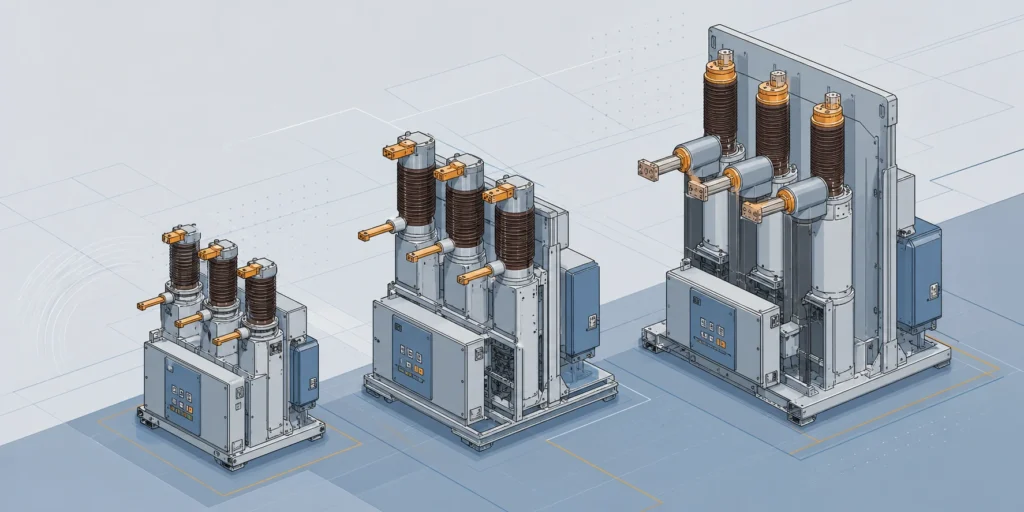
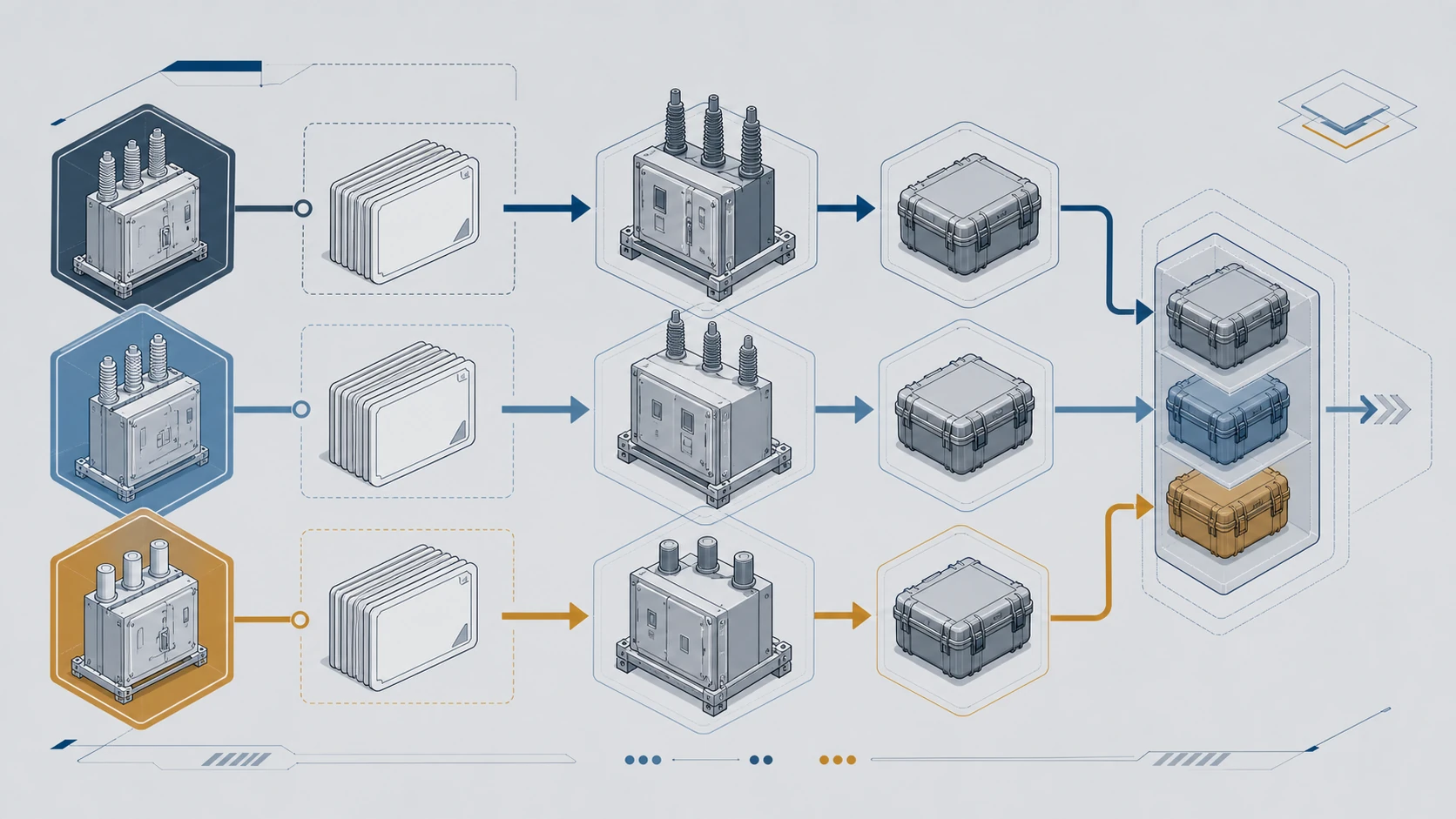
A vacuum circuit breaker inquiry that spans the 12 kV, 24 kV, and 40.5 kV rated-voltage classes is not a single specification request — it is a product-family inquiry that must be structured so the manufacturer or distributor can return comparable, standards-referenced offers for each voltage level. The fastest way to misframe this inquiry is to treat the three classes as interchangeable line items that differ only in a voltage number. Each class carries its own insulation coordination envelope, test-duty matrix, and mechanical-interface geometry, so the inquiry document must collect and transmit the full nameplate, system, and interface record for every class separately while keeping commercial terms unified across the Vacuum Circuit Breakers selection context.
Why a Product-Family Inquiry Differs from a Single-Class RFQ
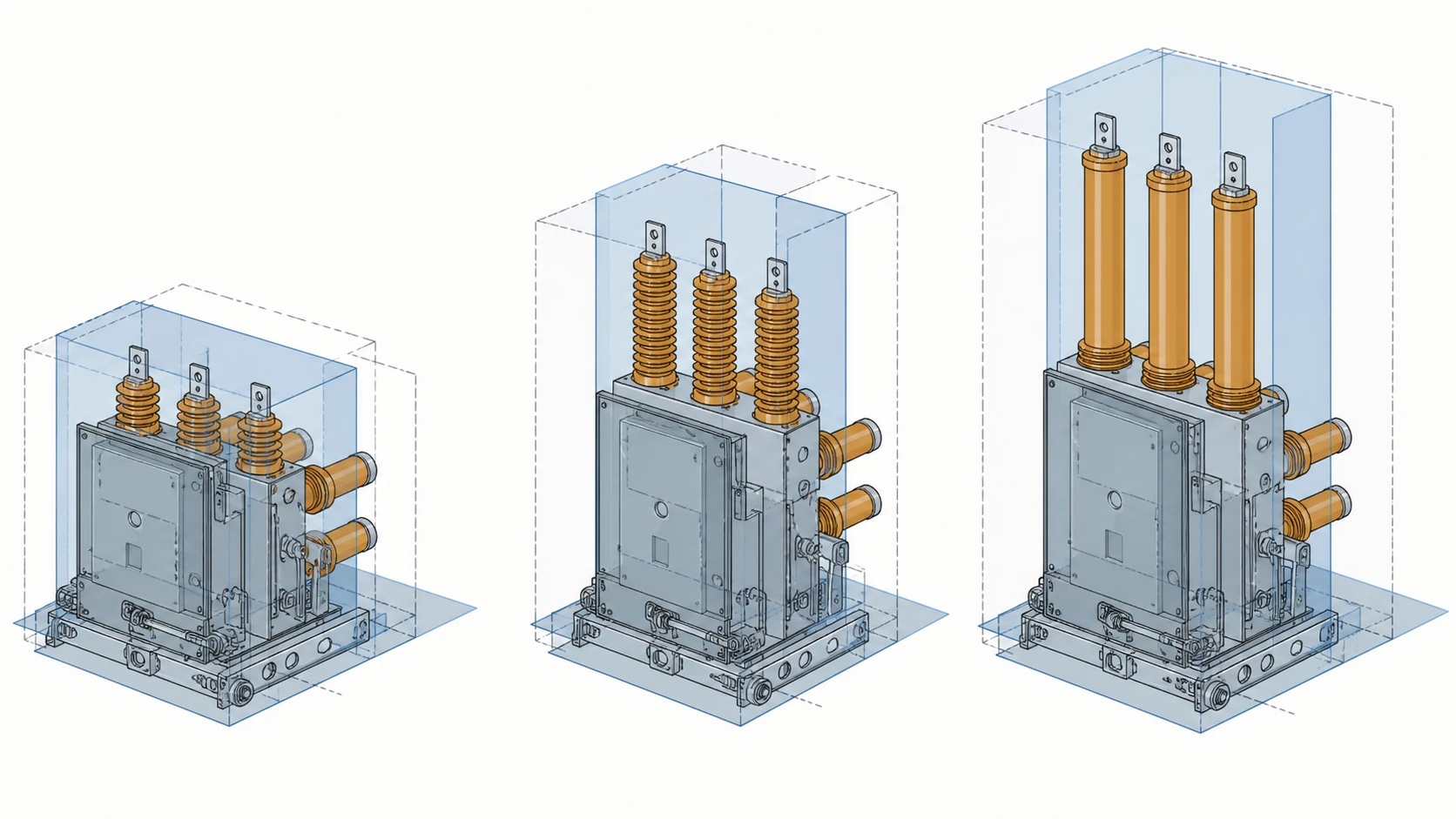
When a utility, industrial campus, or OEM panel builder needs vacuum circuit breakers across more than one voltage class, the procurement path forks early. A single-class RFQ assumes one insulation level, one set of rated short-circuit values, and one switchgear housing geometry. A product-family inquiry must hold all three voltage classes open for technical review at the same time.
ABB's medium-voltage vacuum-interrupter literature describes applications spanning from 1.2 kV through 40.5 kV, listing common nominal voltage levels across that range. That breadth confirms that a single vacuum-interrupter technology platform can serve very different insulation and interrupting envelopes — but it also confirms that the engineering record behind each class is distinct. The inquiry document must respect that distinction while giving the supplier a single commercial framework to price against.
The practical risk of treating 12 kV, 24 kV, and 40.5 kV as a simple parametric table is that the supplier fills gaps with assumptions. If the inquiry omits the system earthing arrangement for the 24 kV feeder but includes it for the 12 kV bus-section breaker, the 24 kV offer may arrive with a default neutral treatment that conflicts with the actual network. Framing the inquiry as a structured family — same data template, separate class sheets — eliminates that failure mode.
Data Categories Every Class Sheet Must Capture
Each voltage class in the inquiry needs its own record sheet. The categories below are not optional fields; they are the minimum information a manufacturer needs to declare compliance and return a binding technical offer.
**Nameplate and ratings block.** Rated voltage (Ur), rated insulation level (lightning impulse withstand and power-frequency withstand), rated normal current, rated short-circuit breaking current, rated short-time withstand current and duration, rated peak withstand current, rated operating sequence, and rated supply voltage for the closing and tripping circuits. These values are not interchangeable across the three classes. A 12 kV breaker's lightning impulse withstand level is a different test value from a 40.5 kV unit's, and the inquiry must state the required values or reference the applicable standard table explicitly.
**System and network context.** System nominal voltage, system earthing method (solidly earthed, resistance-earthed, isolated, or resonant-earthed), prospective short-circuit current at the installation point, system frequency, and whether the breaker will be applied on a cable-fed or overhead-line-fed circuit. The system context drives the TRV (transient recovery voltage) envelope the breaker must clear, and TRV severity differs meaningfully between 12 kV cable networks and 40.5 kV mixed overhead-cable feeders.
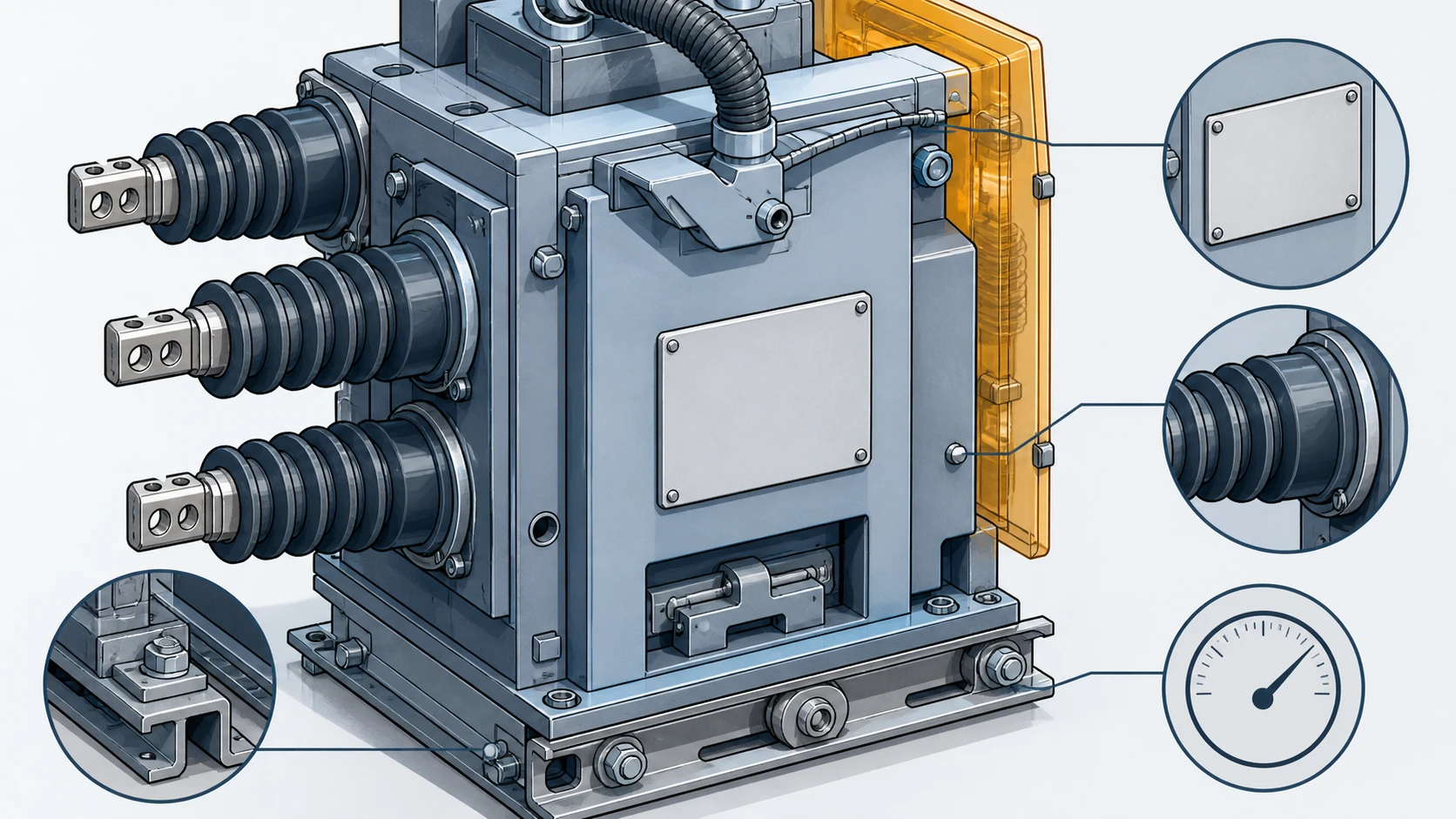
**Mechanical and installation interface.** Withdrawable or fixed mounting, truck-type or plug-in contact system, panel or housing manufacturer and dimensional envelope, bushing configuration, and any seismic or environmental class requirement. ABB's primary vacuum circuit breaker family documentation shows that a declared application and standards context accompanies each family member, reinforcing that the interface record must be collected for each class so the manufacturer can confirm physical fit and standards compliance. Record any associated chassis trucks and racking systems independently.
**Operating mechanism and control.** Spring-charged mechanism, magnetic actuator, or motor-charged stored-energy mechanism; local and remote trip and close requirements; number of operations between maintenance intervals; auxiliary contact configuration; and communication or protection relay interface.
Structuring the Inquiry Document
A well-framed product-family inquiry uses a single cover document with a shared commercial section and separate technical annexes — one per voltage class. The structure below keeps the supplier's quotation aligned to the buyer's evaluation matrix.
| Document section | Scope | Shared or per-class |
|---|---|---|
| Cover letter and commercial terms | Payment, delivery, warranty, LD clauses, inspection rights | Shared |
| General technical requirements | Applicable standards edition, test-report expectations, quality plan | Shared |
| 12 kV technical annex | Nameplate, system, interface, mechanism data for all 12 kV positions | Per-class |
| 24 kV technical annex | Same data template applied to all 24 kV positions | Per-class |
| 40.5 kV technical annex | Same data template applied to all 40.5 kV positions | Per-class |
| Evaluation criteria and weighting | Technical compliance scoring, delivery weighting, price weighting | Shared |
Using the same data template for each annex is critical. It lets the evaluation team compare completeness across the supplier's response without re-mapping field names. It also makes omissions visible: if the supplier answers every field for the 12 kV annex but leaves the rated operating sequence blank on the 40.5 kV annex, the gap is immediately flagged during technical bid evaluation.
Evidence Boundaries and What the Inquiry Cannot Decide
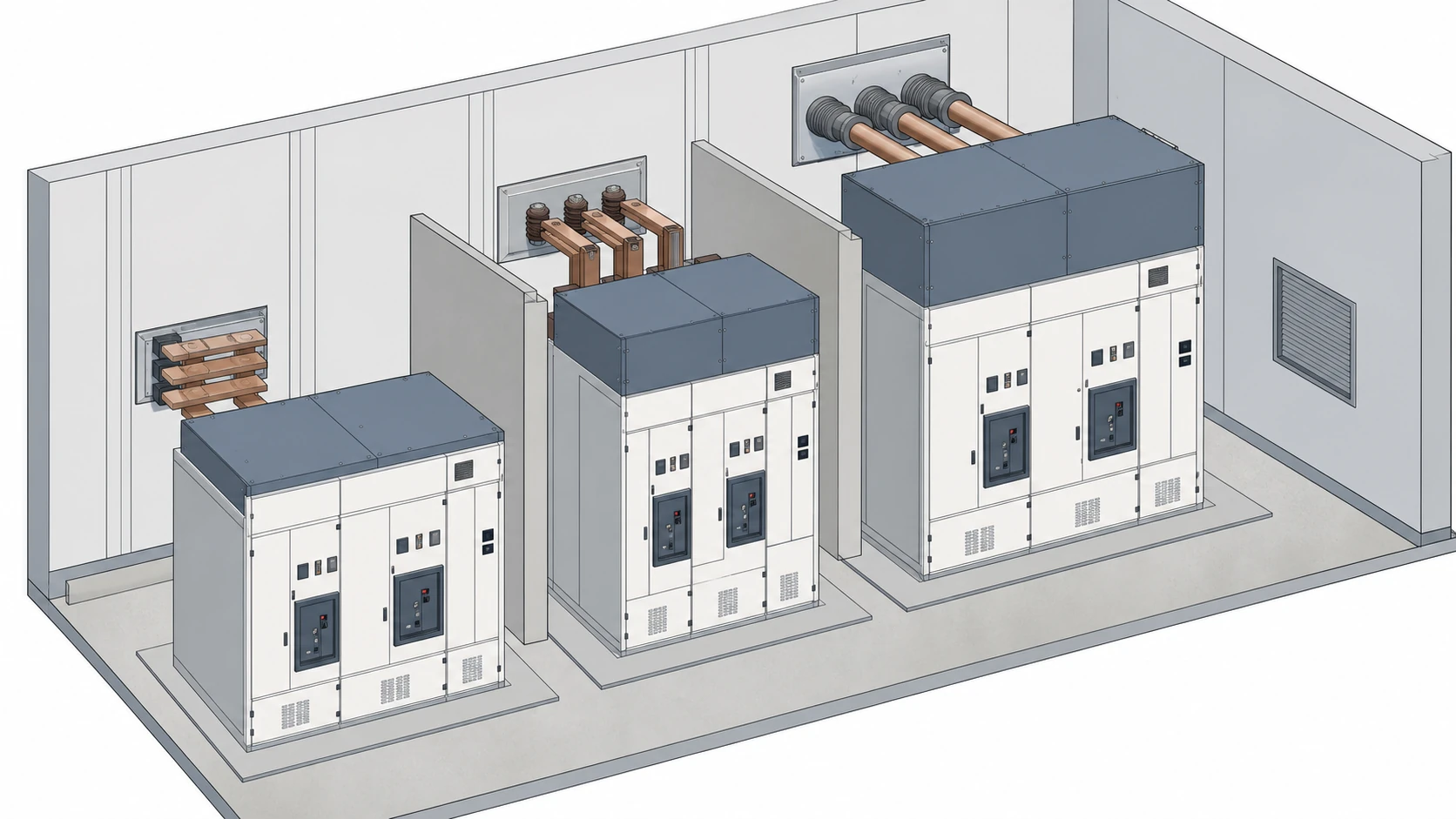
The inquiry frames what the buyer needs. It does not determine whether a particular voltage rating is suitable for a particular system, and it does not establish interchangeability between classes. A 24 kV-rated breaker is not a conservative substitute for a 12 kV application without a formal insulation-coordination study, and a 40.5 kV breaker cannot be assumed to fit a 24 kV panel housing without dimensional and interface verification.
ABB's vacuum-interrupter documentation organizes nominal voltage levels across the medium-voltage range but does not imply that selecting among those levels is a procurement decision alone. The choice of rated voltage is an engineering decision governed by the system's insulation coordination, the network's prospective fault levels, and the switchgear assembly's type-test certification. The inquiry document should request the manufacturer's declaration of the standards and type-test reports that cover each offered breaker, so the engineering team can verify suitability independently.
Where the buyer is uncertain about the correct voltage class for a specific application point, the inquiry should flag that position explicitly and request the manufacturer's application-engineering review. This is not a weakness in the inquiry — it is an appropriate use of the manufacturer's declared application context within the wider MV Switching Equipment record.
Standards and Type-Test Documentation to Request
Each voltage class has its own type-test portfolio. The inquiry should request, at minimum, the following evidence from the supplier for every class offered.
IEC 62271-100 type-test report covering the rated short-circuit breaking current, rated operating sequence, and TRV parameters at the declared rated voltage. The edition year matters; if the buyer's specification references a specific edition, the inquiry must state it. A report certified to an earlier edition may not cover test duties added in later revisions.
IEC 62271-1 common-specifications compliance declaration, covering insulation levels, temperature-rise limits, and mechanical endurance. The mechanical-endurance class (M1 or M2, and E1 or E2 for electrical endurance) should be stated as a requirement in the inquiry, not left for the supplier to propose.
Internal-arc classification if the breaker will be installed in arc-classified switchgear. The inquiry should state the required IAC class and arc duration, since this obligation flows from the switchgear assembly's type test, not from the breaker alone.
Seismic qualification reports if the installation site has a seismic requirement. The inquiry should reference the applicable seismic standard and response-spectrum level.
The supplier's response to these requests is the evidence base for technical bid evaluation. Without it, the evaluation team is comparing marketing descriptions, not verified performance.
Common Inquiry Errors and How to Avoid Them
**Copying the 12 kV data sheet into the 24 kV and 40.5 kV annexes and changing only the voltage field.** This propagates insulation-level and short-circuit values that belong to one class into another, creating a technically invalid specification. Build each annex from the actual system study for that voltage level.
**Omitting the rated operating sequence.** The operating sequence (O-t-CO-t'-CO, or variations) defines the breaker's duty cycle under fault conditions. Different applications within the same inquiry may require different sequences. State it per position.
**Specifying mechanism type without confirming panel compatibility.** A spring-charged mechanism and a magnetic actuator have different depth and height envelopes. If the 40.5 kV positions use a different panel family than the 12 kV positions, the mechanism specification must be confirmed against each panel's type-test documentation.
**Requesting a single price per breaker without separating scope.** A product-family inquiry should break the price into the breaker, the truck or cradle, the secondary wiring and auxiliary contacts, spare interrupter assemblies, and any commissioning support. This separation makes cross-class cost comparison meaningful.
Review Workflow Before Issuing the Inquiry
Before the inquiry leaves the buyer's organization, a short review loop prevents most rework cycles with the supplier.
First, confirm that every position in the project's single-line diagram has been assigned to a voltage class and has a corresponding entry in the correct annex. Unassigned positions generate ambiguous offers.
Second, verify that the system-study data (prospective fault current, TRV parameters, system earthing) is current and matches the annex entries. If the system study is older than the project's last revision, flag that discrepancy for the engineering team.
Third, check that the standards edition referenced in the general technical requirements section matches the edition referenced in each per-class annex. Mixed-edition references create compliance ambiguity that the supplier will resolve in their own favor.
Fourth, confirm that the evaluation criteria section weights technical compliance, delivery, and commercial terms in a way that the evaluation committee has agreed to before issue. Changing weights after receiving bids undermines the procurement process.
Model-specific approved procedures govern any commissioning, adjustment, or maintenance actions after the breakers are delivered. The inquiry itself should require the supplier to include operation and maintenance documentation as a deliverable, but the inquiry document is not the place to specify live-operation sequences, torque values, or setpoints. The VCB replacement information checklist is a useful baseline for preserving the existing record.
FAQ
What is the purpose of separating the inquiry into per-class technical annexes?
Separating the inquiry into one technical annex per voltage class ensures that the nameplate ratings, insulation levels, system data, and mechanical interface details for each class are stated independently. This prevents the common error of carrying assumptions from one voltage class into another and gives the supplier a clear, auditable data set to quote against for each class.
What is the risk of omitting system earthing information from a VCB inquiry?
System earthing method directly influences the transient recovery voltage the breaker must clear after interrupting a fault. Omitting it forces the supplier to assume a default earthing arrangement, which may result in an offer that is either over-specified (adding cost) or under-specified (creating a safety and reliability risk). Each voltage class in the inquiry should state the earthing method for its associated network segment.
What is the role of type-test reports in evaluating a product-family inquiry response?
Type-test reports to IEC 62271-100 and IEC 62271-1 provide the verified evidence that the offered breaker meets the rated performance declared by the manufacturer. Without these reports, the evaluation team cannot confirm that the breaker's short-circuit breaking capability, insulation withstand levels, and mechanical endurance match the inquiry's requirements. The inquiry should explicitly request these reports for every voltage class offered.
What is the difference between specifying a voltage rating and selecting a voltage rating?
Specifying a voltage rating in an inquiry means recording the rated voltage that the system study and insulation-coordination analysis have already determined is required. Selecting a voltage rating is the upstream engineering decision that determines which rated voltage is appropriate for a given network point. The inquiry document assumes that selection has already occurred; it captures and transmits the result. If the selection is still open for any position, the inquiry should flag that position for the manufacturer's application-engineering review rather than defaulting to a class without engineering justification.

