

Quick Takeaway
- Confirm the project duty and applicable requirements for the product range before selection or service work.
- Use recorded inspection and test evidence instead of unsupported assumptions.
- Keep the final acceptance, maintenance, and handover documents with the equipment record.
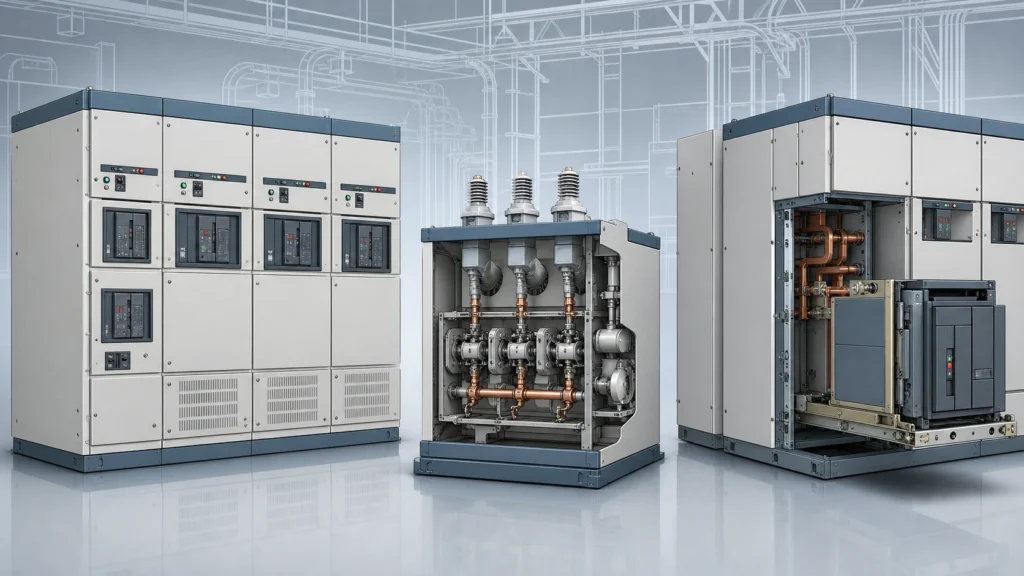
A product-family page on a switchgear manufacturer's Products Hub tells you what broad equipment categories exist and how the catalog is organized — it does not confirm that a specific circuit breaker, relay, or busbar arrangement will work inside your assembly. To move from browsing product families to an actionable request for quotation, you need to identify the correct family, collect your site-specific parameters, and then hand both to the manufacturer's application engineers for a configuration that only custom engineering documentation can validate. This article walks through that sequence so you spend your inquiry preparation time on the evidence that matters rather than on assumptions drawn from navigation content.
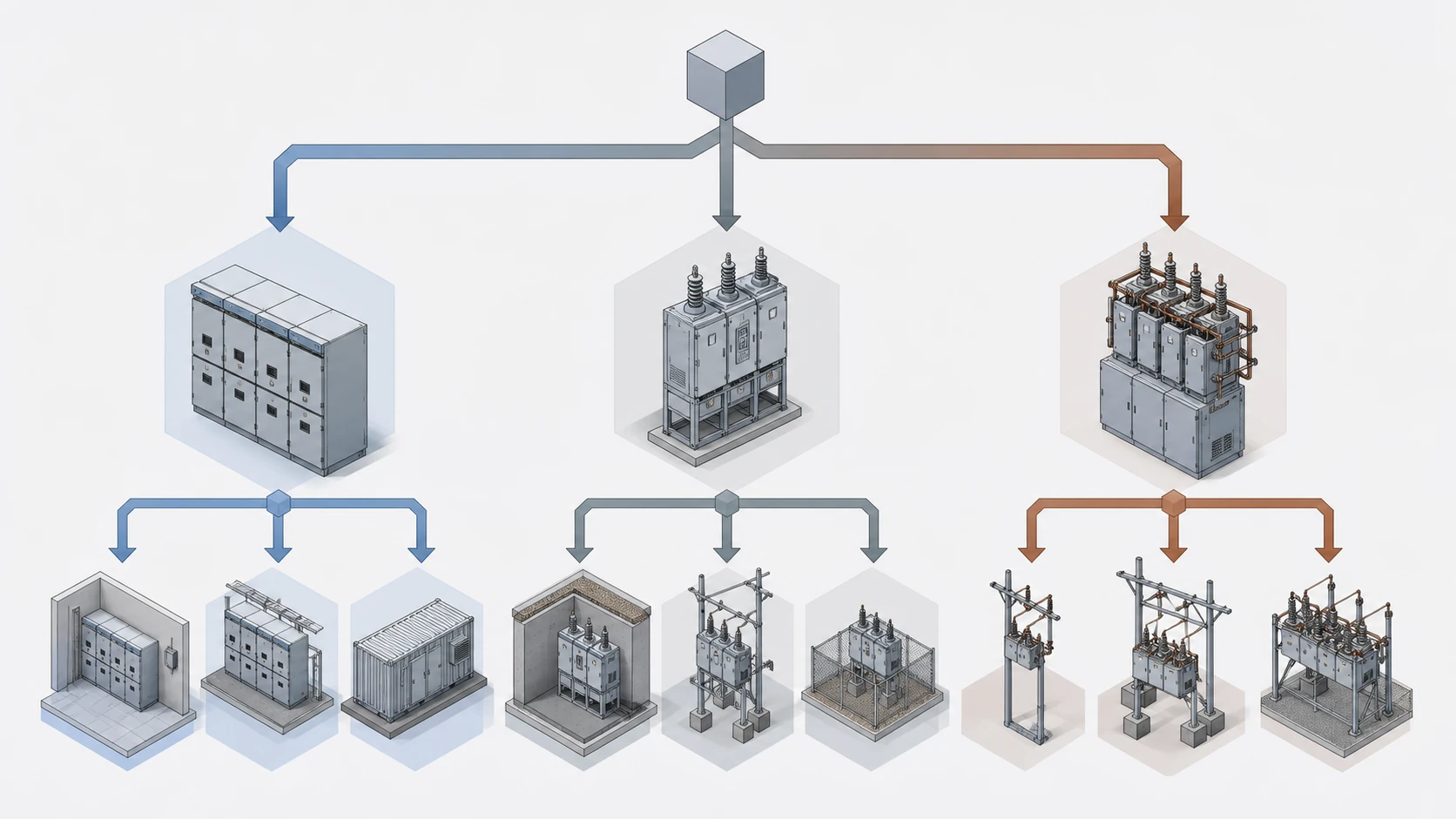
Medium voltage switching equipment rated roughly 1 kV through 52 kV spans dozens of configurations: indoor arc-resistant lineups, outdoor ring-main units, gas-insulated compact modules, and hybrid designs that combine several switching technologies in one enclosure. Manufacturers group these into product families — names or series that share a voltage class, insulation medium, or mechanical platform — so that buyers can narrow the catalog quickly.
That grouping is editorial. IEC 62271-200:2021 defines its scope as prefabricated AC metal-enclosed switchgear and controlgear assemblies, meaning the standard treats each finished assembly as a tested, rated whole. A product-family page describes the starting platform; the assembly that ships to your site is a specific configuration of that platform, with ratings, busbar geometry, protection schemes, and auxiliary circuits that are fixed only after application engineering is complete. Treating the family page as proof that a particular breaker or relay fits the assembly skips the engineering step that IEC 62271-200 presupposes has already happened.
The practical consequence is simple: use the product-family level to eliminate families that cannot serve your voltage class, insulation preference, or installation footprint, and then shift to a formal inquiry where the manufacturer's engineers do the rest.
Mapping Your Site Requirements to Product-Family Selection Criteria
Before you open the Products Hub, gather the parameters that separate one family from another. These are the coarse filters — the characteristics broad enough to appear on a family-level datasheet or brochure but specific enough to rule out entire product lines.
**System voltage and insulation level.** Record the nominal system voltage, the rated voltage (U_r) you need the switchgear to withstand, and the required basic insulation level or rated lightning-impulse withstand voltage. A 12 kV family cannot serve a 24 kV system even if the breaker mechanism is physically identical.
**Insulation medium.** Air-insulated, gas-insulated (SF₆ or fluoronitrile-based alternatives), and solid-insulated families each impose different footprint, maintenance, and environmental constraints. Your site's indoor clearance, ambient temperature range, and sustainability policy will steer this choice before any detailed engineering begins.
**Rated normal current and short-circuit current.** Busbar and main-circuit ratings at the family level set upper boundaries. If your system fault study shows 31.5 kA symmetrical and a family tops out at 25 kA, that family is eliminated regardless of how well its other features match.
**Installation environment.** Indoor versus outdoor, altitude above 1 000 m (which derates insulation), coastal or industrial pollution class, seismic zone — each of these can disqualify a family or require a variant that only some families offer.
**Switching duty.** Frequent motor switching, capacitor-bank switching, transformer feeder protection, and bus-tie applications each stress the interrupter differently. Families may share a voltage class but differ in the switching duties their standard configurations support.
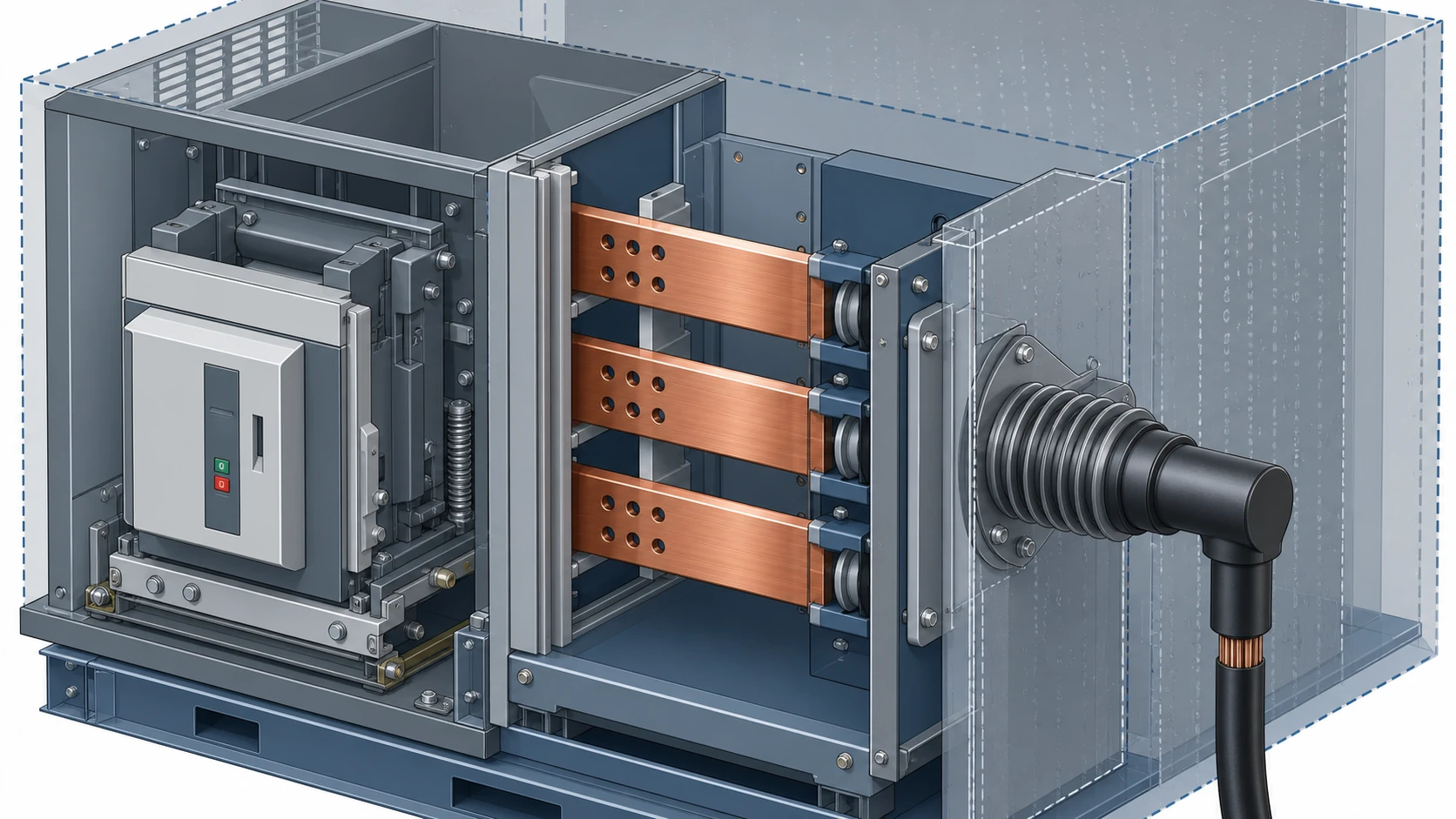
A manufacturer's Products Hub typically organizes families by voltage class first, then by insulation medium or application type. Reeuini's Technical Articles and product pages support this navigation process. When you land on the page, resist the urge to click the first family that mentions your voltage. Instead, work through a deliberate scan.
Start at the top-level voltage grouping and confirm you are looking at medium voltage families, not low-voltage or high-voltage equipment that may share visual styling on the page. Within the MV grouping, read each family's one-line description for the insulation medium and installation type. Eliminate families that do not match your coarse filters. For the remaining candidates — often two or three — open their individual family pages and compare the rated-voltage and rated-current ceilings, the available switching devices (vacuum circuit breaker, load-break switch, disconnector combinations), and the physical arrangement options (single-bus, double-bus, extensible versus fixed-width).
At this stage you are building a shortlist, not a specification. A shortlist of one family is ideal; a shortlist of two is common when families overlap in voltage class but differ in compactness or switching technology.
Understanding the Evidence Boundary Between Family Pages and Custom Engineering
This distinction is critical for procurement readers who will attach product-family PDFs to internal approval packages. A family-level document typically provides rated values (voltage, current, short-time withstand), general dimensions, standard feature lists, and compliance certifications at the platform level. It does not provide the evidence that your specific assembly will perform as required.
Schneider Electric, for example, describes a switchgear order as a custom-designed assembly. The customer-order drawings Schneider identifies for such an order include bills of material, one-line diagrams, control schematics, and wiring diagrams — documents generated after application engineering, not before. Every reputable manufacturer follows the same logic: the product-family brochure gets you to the inquiry; the order-specific drawing package is the engineering evidence.
This means your internal approval process should reference the family brochure only to justify why this family was shortlisted. The approval gate that confirms "this equipment is suitable for our substation" must wait for the manufacturer's application-engineered documentation.
Building the Evidence Package for Your RFQ
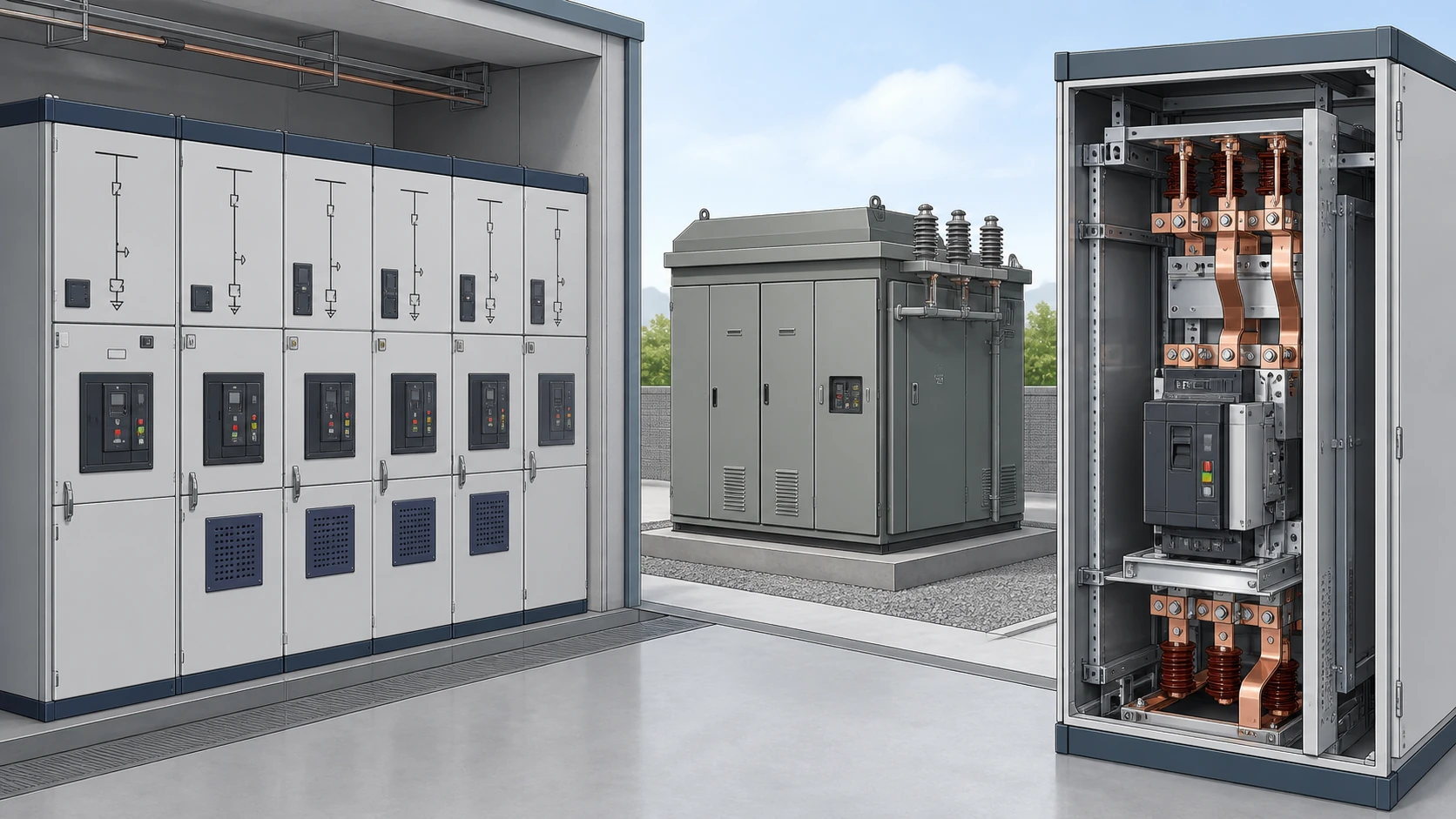
Once you have a shortlisted product family, assemble the information the manufacturer needs to move from family-level discussion to a priced, engineered proposal.
**Single-line diagram.** Show every incoming feeder, bus section, outgoing feeder, bus coupler, and metering compartment. Include transformer ratings, cable sizes, and any existing equipment the new switchgear must interface with.
**System studies.** Provide the short-circuit study (symmetrical and asymmetrical fault currents at the switchgear bus), the protection coordination study or at least the intended relay philosophy, and the load-flow study if bus continuous-current ratings are marginal.
**Site conditions.** Document indoor or outdoor location, available floor space and ceiling height, ambient temperature extremes, altitude, humidity, pollution or corrosion exposure, and seismic requirements. Include any access restrictions — door widths, crane capacity, transport route limits — that constrain the physical size of shipping sections.
**Auxiliary power and control interface.** Specify the control voltage (DC 110 V, 48 V, or other), the communication protocol if SCADA integration is needed (IEC 61850, DNP3, Modbus), and the preferred metering class for CTs and VTs.
**Standards and owner specifications.** List the governing standards (IEC 62271-200, local utility requirements, company engineering standards) and any deviations or additions. If arc-resistance per IEC 62271-200 Annex A is required, state the accessibility type and duration.
Providing this package with the RFQ allows the manufacturer to return a proposal tied to a specific assembly configuration, not just a family-level budgetary estimate.
Common Shortlisting Mistakes and How to Avoid Them
**Selecting by physical appearance.** Two switchgear families can look nearly identical in catalog photos yet differ in arc-resistance rating, busbar material, or gas-handling requirements. Always filter by rated values first.
**Confusing component availability with assembly suitability.** A vacuum circuit breaker may be listed as an option within a product family, but the specific combination of breaker rating, CT ratio, and compartment size you need may not be a standard offering. The family page confirms the breaker exists in that platform; only the application engineer confirms it fits your arrangement.
**Assuming one family covers all feeders.** A substation with a 36 kV incoming section and 12 kV outgoing feeders needs two different families (or at least two different rated-voltage variants within a family). Scan your single-line diagram for voltage transitions before you shortlist.
**Skipping the altitude or temperature check.** Standard ratings assume altitude ≤ 1 000 m and ambient temperature ≤ 40 °C. If your site exceeds either, the family's published ratings must be derated, and some families may not support the necessary derating without a special design.
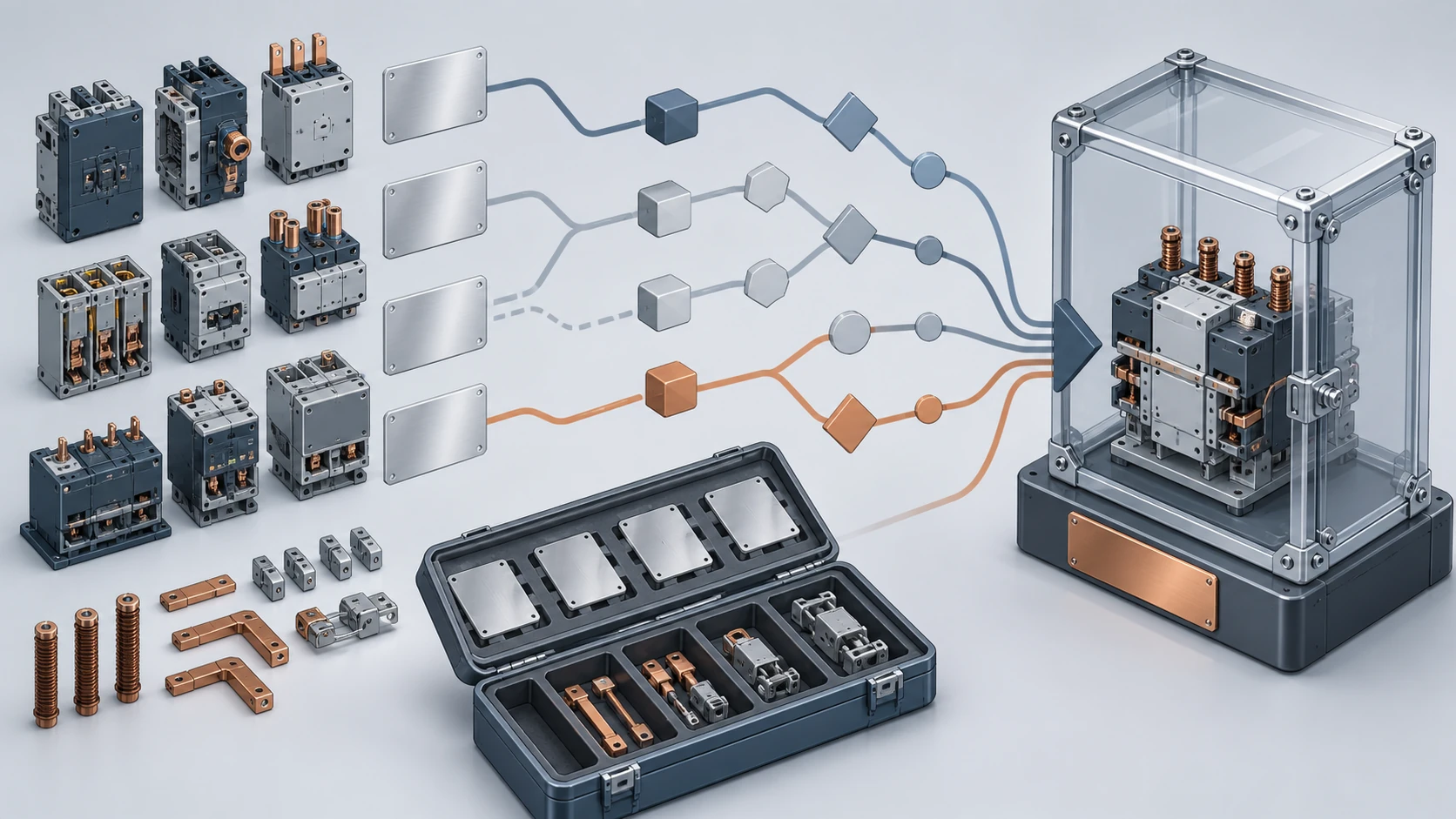
A Practical Review Workflow Before You Contact the Manufacturer
Use the following sequence as a pre-inquiry checklist. Each step should produce a documented answer, not an assumption.
1. Record your system voltage, fault level, and load currents from the latest system study.
2. Confirm the installation environment: indoor or outdoor, altitude, temperature range, pollution class, seismic zone.
3. Open the Products Hub and eliminate every family that does not meet the voltage and insulation-medium requirements.
4. For each remaining family, compare its rated short-circuit withstand and continuous-current ceiling against your system study values.
5. Verify that the switching device type available in the family matches your switching duty (frequent operation, capacitor switching, transformer protection).
6. Check dimensional constraints: will the shipping sections fit through your access route, and will the assembled lineup fit the available floor space with required clearances?
7. Prepare the evidence package described above: single-line diagram, system studies, site conditions, auxiliary and control requirements, applicable standards.
8. Submit the package with your RFQ, referencing the shortlisted family by name so the application engineer starts from the right platform.
If any step produces an ambiguous answer — for example, the fault level is close to the family's ceiling, or you are uncertain whether the family supports the communication protocol you need — flag that item explicitly in your inquiry. An explicit question in an RFQ is always cheaper than a change order after the drawing review.
When to Revisit Your Product-Family Choice
A family selection made early in a project can become invalid as design develops. Revisit your shortlist whenever the system fault study is updated (new generation sources or network reconfigurations can raise fault levels), the substation layout changes (reducing clearance or changing indoor-to-outdoor classification), the protection philosophy changes (adding bus-differential protection, for example, may require additional CT cores that not every family accommodates in its standard compartment), or the owner's specification is revised to require a different arc-classification or insulation medium.
Treat the product-family shortlist as a living input to your procurement process, not a one-time decision.
FAQ
What is a medium voltage switchgear product family?
A product family is a manufacturer's grouping of switchgear assemblies that share a common mechanical platform, voltage class, and insulation medium. It is a catalog-navigation concept: it tells you the broad capabilities and configuration options available on that platform, but it does not define the specific assembly that will be engineered for your order.
What is the difference between a product-family page and an order-specific drawing package?
A product-family page provides general rated values, standard features, and configuration options for a platform. An order-specific drawing package — which Schneider Electric describes as including bills of material, one-line diagrams, control schematics, and wiring diagrams — documents the exact assembly engineered for a particular customer order. Only the drawing package constitutes evidence that a configuration meets your project requirements.
What is the minimum information I need before selecting a product family?
You need at least the nominal system voltage, the rated voltage and insulation level, the prospective short-circuit current at the bus, the required continuous current, the insulation medium preference, and the installation environment (indoor or outdoor, altitude, ambient temperature). Without these, you cannot meaningfully eliminate families that do not fit your application.
What is the role of IEC 62271-200 in product-family selection?
IEC 62271-200:2021 applies to prefabricated AC metal-enclosed switchgear and controlgear assemblies. It sets the type-test and routine-test framework that every compliant assembly must satisfy. During family selection, you use its rating structure (rated voltage, rated current, rated short-time withstand current, internal-arc classification) to compare your requirements against what each family platform offers. The standard does not, however, validate your specific assembly — that validation happens through the tested and certified assembly configuration documented in the order-specific engineering package.
What is the risk of treating a product-family brochure as an engineering approval?
The risk is that a procurement or project team assumes compatibility has been verified when it has not. A family brochure confirms that the platform can be configured within certain rated boundaries; it does not confirm that your particular combination of breaker rating, CT ratio, protection relay, busbar arrangement, and auxiliary circuits has been engineered and tested as an assembly. Skipping the application-engineering step can lead to change orders, delivery delays, or, in the worst case, an assembly that does not meet the rated short-circuit or arc-resistance requirements of your installation.

