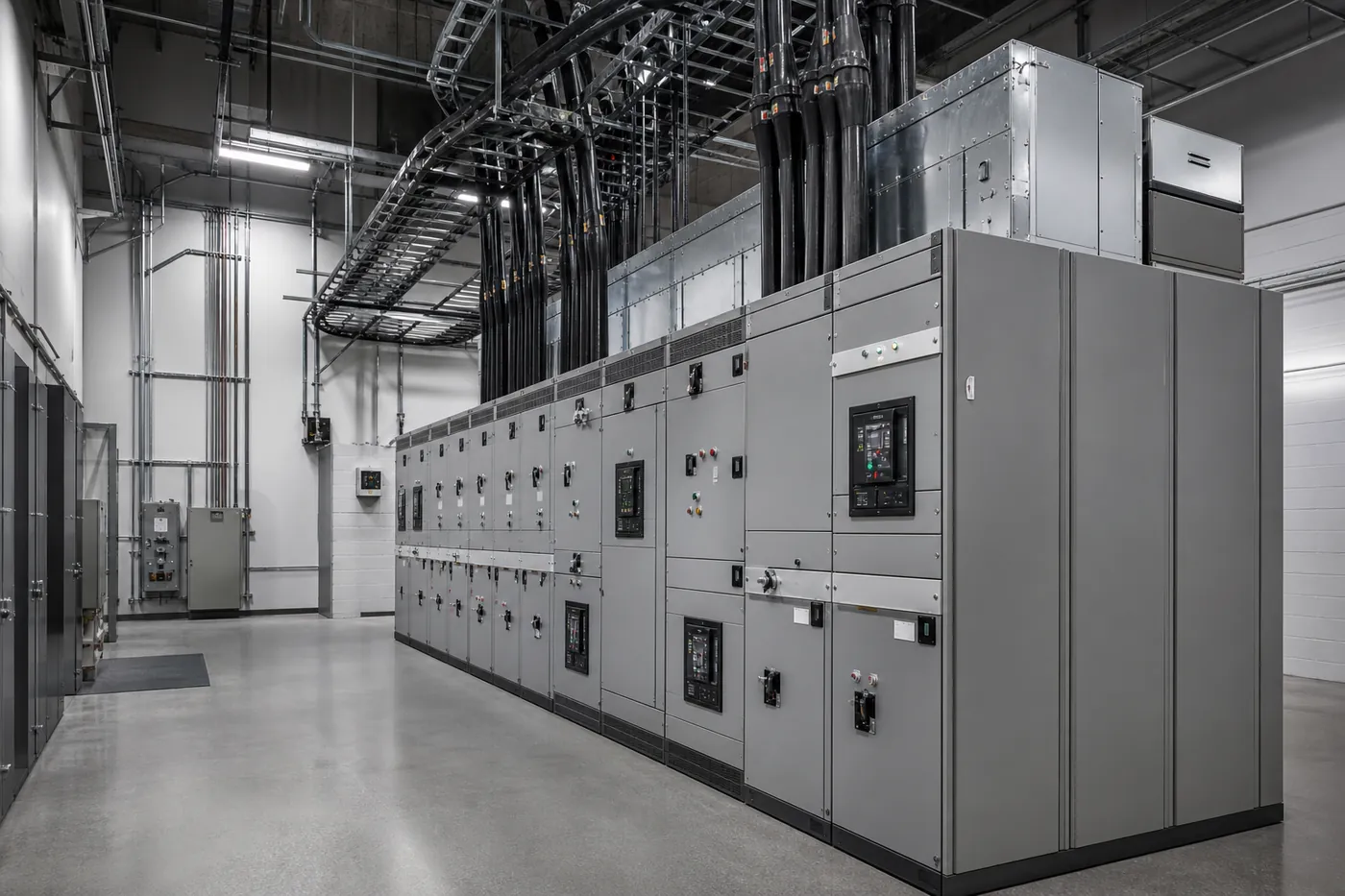
Medium-voltage switchgear installed in an indoor secondary distribution room

Medium Voltage Switchgear Equipment by Application

Compare switching equipment, components and instrument transformers for six common MV applications, then prepare the ratings, environmental conditions and interface data required for quotation.

Medium Voltage Switchgear Applications and Selection Requirements

Compare operating environments, system duties and selection inputs for six common MV applications.

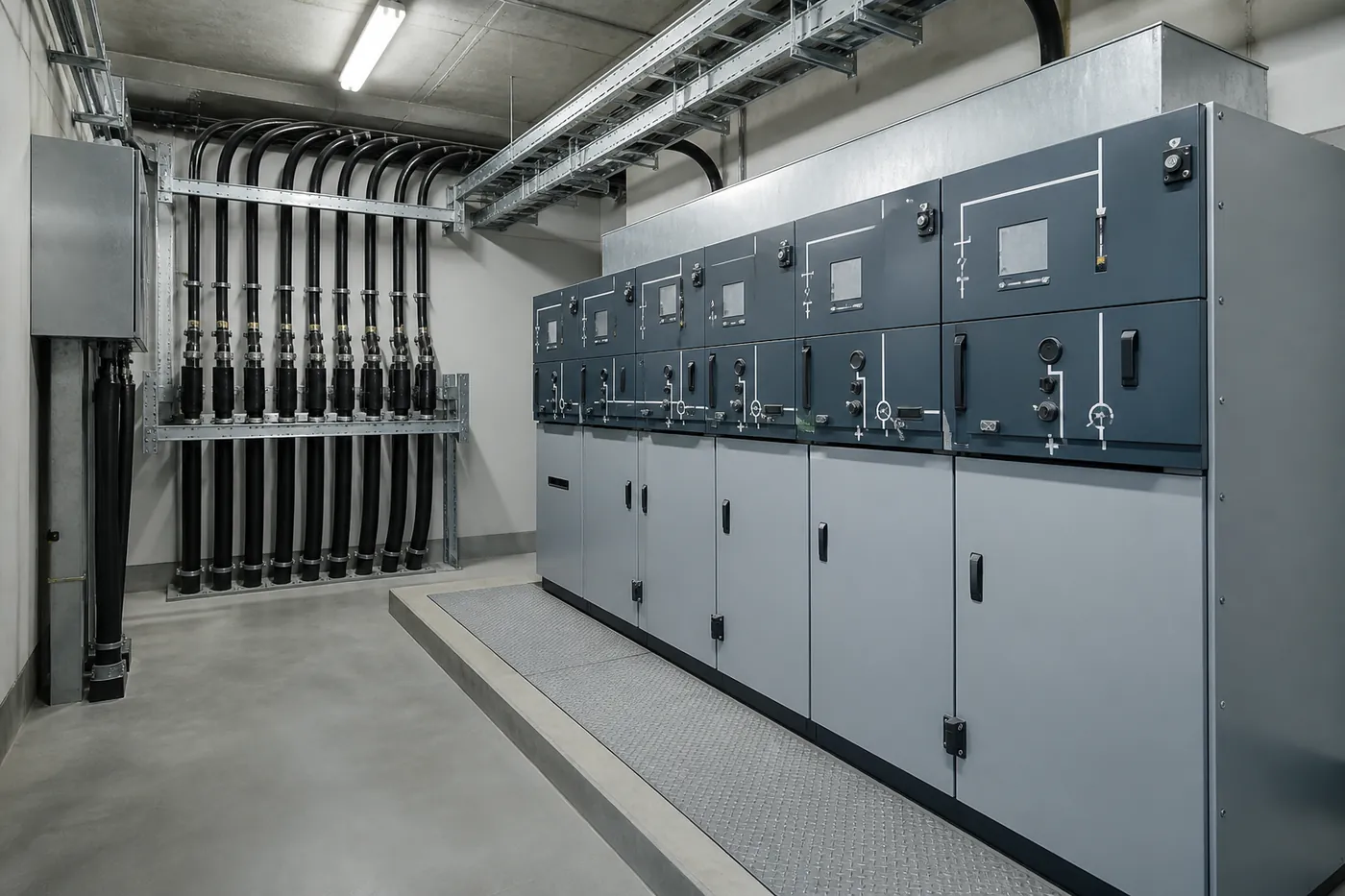
Compact ring main unit installation in an indoor distribution network
Indoor distribution networks

Cabinet architecture, switching duty, interlocks and maintenance access influence equipment selection.

Secondary distribution

Environment
Indoor substation or switchroom, metal-clad panels, cable or bus connections and defined maintenance access.
Selection constraints
System voltage, rated current, fault level, switching duty, protection scheme, metering class, panel space and mechanical interface.

Ring main unit systems

Environment
Urban distribution, compact substations and secondary networks where enclosure size and operating sequence are tightly controlled.
Selection constraints
Insulation medium, switching positions, operating sequence, mechanism interface, interlock logic, cabinet dimensions and indication requirements.

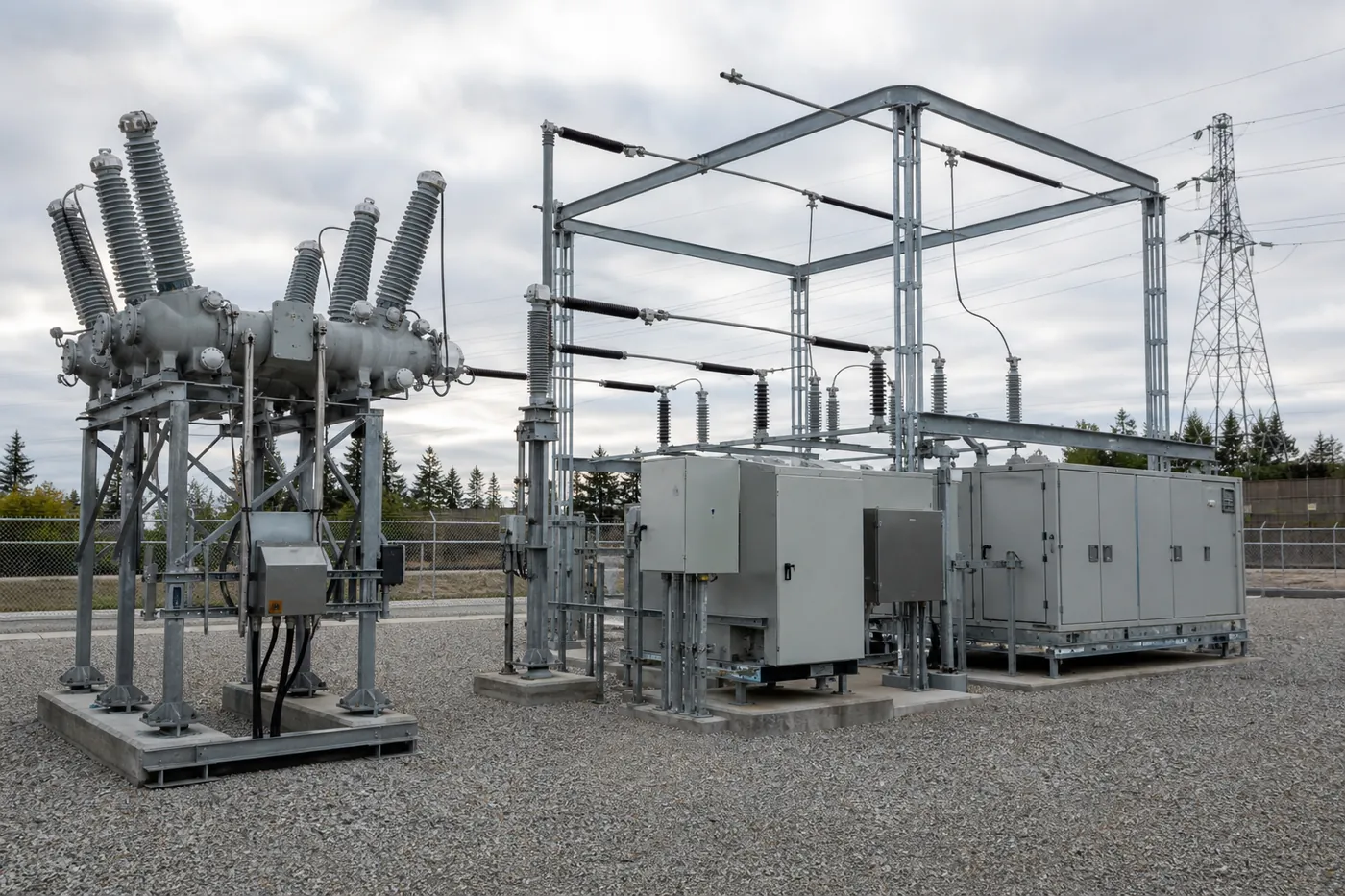
Outdoor medium-voltage distribution installation under site exposure
Insulation and exposure

Insulation systems, enclosure interfaces and site conditions govern sealed and outdoor equipment.

Gas-insulated switchgear

Environment
Indoor compact installations with controlled gas or alternative insulation systems and defined enclosure interfaces.
Selection constraints
Insulation medium, rated voltage and current, short-time withstand, conductor and bushing interfaces, pressure monitoring, indication and interlock logic.

Outdoor distribution

Environment
Pole, frame or substation mounting with rain, dust, altitude, temperature and other site-specific service conditions.
Selection constraints
Insulation level, rated values, switching duty, mounting arrangement, operating method, protection degree and local climate.
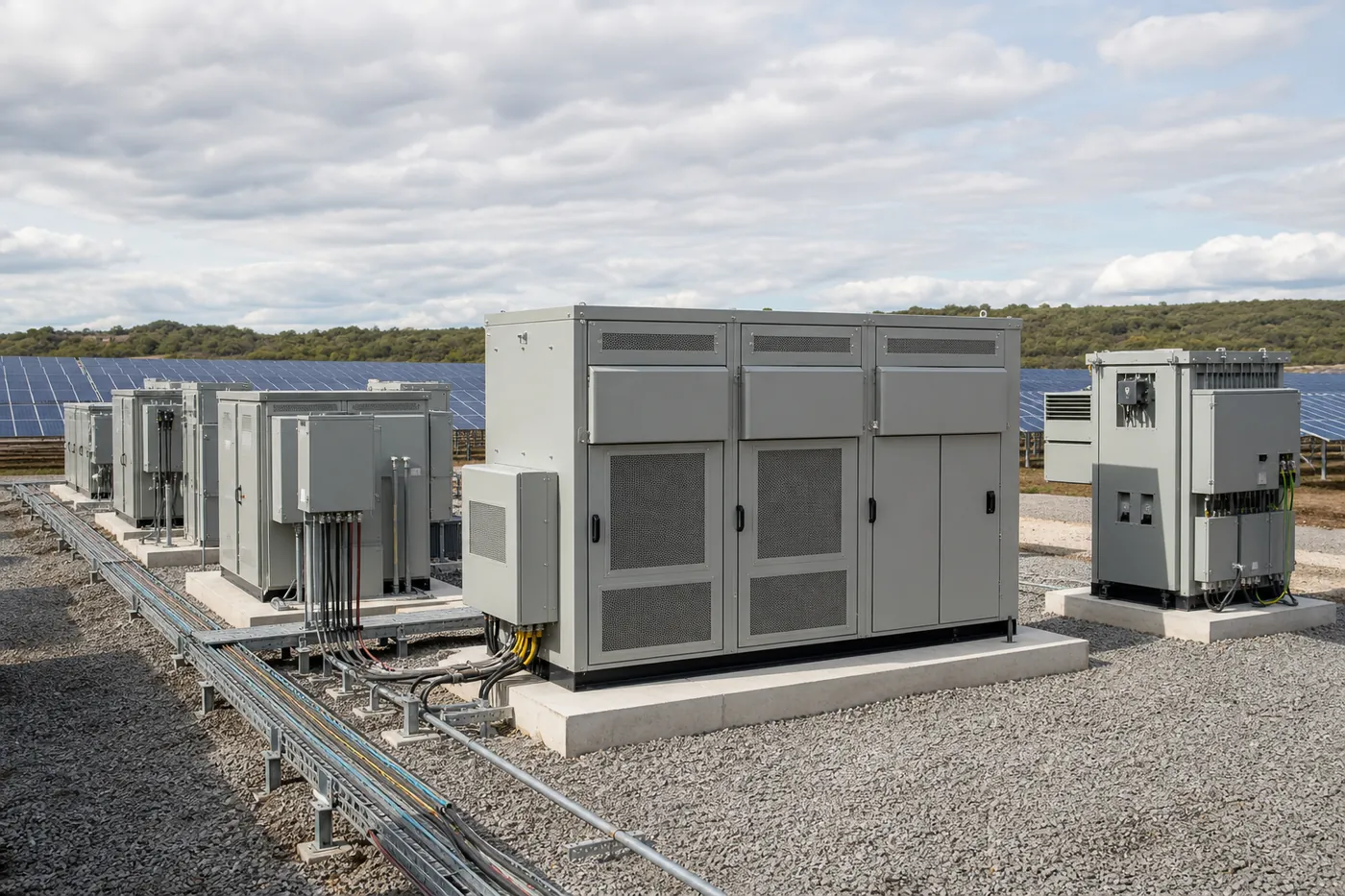
Renewable energy medium-voltage interconnection equipment
Grid connection and continuity

Source arrangement, protection requirements and service continuity determine the equipment specification.

Renewable interconnection

Environment
Solar, wind or other generation sites with indoor or outdoor equipment distributed between collection and grid connection points.
Selection constraints
Grid voltage, current, fault level, protection and metering requirements, switching duty, interface drawings and installation conditions.

Critical power facilities

Environment
Facilities with multiple sources, controlled switching sequences and defined service or withdrawal positions.
Selection constraints
Supply arrangement, rated values, fault level, transfer sequence, withdrawal interface, maintenance access, protection and metering.

MV Equipment for Distribution, RMU, GIS and Outdoor Networks

Compare the switching equipment, components and instrument transformers typically required for each application. Final model selection depends on ratings, construction and interfaces.

Equipment and components commonly specified for six medium-voltage applications.
ApplicationMV switching equipmentSwitchgear componentsCircuit breaker componentsInstrument transformers
Secondary distributionVacuum circuit breakers and switchgear handcartsMetal-clad, insulation and auxiliary componentsConductive, racking, control and interlock componentsIndoor current and voltage transformers
Ring main unit systemsLoad break switches and disconnect switchesRMU components, insulation, bushings, indication and monitoringOperating, control and auxiliary components as requiredCurrent, voltage or sensing requirements as specified
Gas-insulated switchgearSwitching equipment matched to the GIS platformGIS components, conductive paths, bushings and pressure monitoringMechanism, control, conductive and interlock componentsInstrument transformers or sensors defined by the system
Outdoor distributionOutdoor VCBs, load break switches and disconnect switchesOutdoor insulation and auxiliary interfacesOperating mechanisms and conductive componentsOutdoor current and voltage transformers
Renewable interconnectionVCBs, load break switches and disconnect switchesInsulation, indication and auxiliary componentsBreaker conductive, control and interlock componentsMetering and protection CTs or VTs
Critical power facilitiesVacuum circuit breakers and switchgear handcartsMetal-clad, insulation and auxiliary componentsRacking, interlock, control and conductive componentsIndoor CTs and VTs for protection or metering
Selection boundaryFinal equipment selection depends on the complete specification. The model, rating, construction or interface may change after detailed technical confirmation.

Engineering Data Required for MV Equipment Selection

Send the available ratings, installation conditions and interface details. A complete specification is not required for initial model comparison and RFQ preparation.

Start with the document or equipment data available

Send any existing drawing, photograph, nameplate or specification.

  • System or single-line diagram
  • Model, nameplate or equipment photograph
  • Target ratings or specification
  • Existing drawing or interface dimensions

Information used to confirm product fit

System ratings

Voltage, rated current, frequency, fault level, insulation level, protection and metering duty.

Installation conditions

Indoor or outdoor location, altitude, ambient range, humidity, pollution, protection degree and available space.

Equipment and interfaces

Cabinet platform, mounting, operating sequence, mechanical connection, terminals, interlocks and control supply.

Drawings and equipment data

Single-line diagram, outline or mounting drawing, nameplate, existing model, equipment photograph and project notes.

How to Specify MV Equipment for New Projects and Replacements

Define the application, governing ratings, installation conditions and interfaces, then identify the required equipment or component and remaining RFQ data.

Specification sequenceApplication → Inputs → Product fit → Confirmation
  1. 01

    Classify the application

    Confirm the operating context, equipment role and point in the single-line arrangement.

  2. 02

    Confirm ratings and site conditions

    Check system ratings, switching duty, installation conditions, interfaces and available drawings.

  3. 03

    Select equipment and components

    Select the required switching equipment, switchgear components and instrument transformers for the application.

  4. 04

    Prepare the RFQ

    List required drawings, test documents, quantity, delivery destination and any remaining technical questions.

Final technical confirmationThis process identifies suitable equipment and components. Final model, compliance scope, drawings and testing requirements are confirmed against the agreed specification and purchase order.

Medium Voltage Application and Equipment Selection FAQ

Answers for engineers and purchasing teams preparing an application-specific equipment shortlist or RFQ.

Which MV equipment is typically used for secondary distribution, RMU and GIS projects?

Secondary distribution commonly combines metal-clad switchgear components, vacuum circuit breakers, handcarts, instrument transformers, insulation parts and auxiliary components. RMU projects use compact switching mechanisms, indication, interlocks, bushings and insulation parts. GIS projects add enclosed conductive interfaces, bushings, pressure monitoring and sensing components. Final models depend on the specified ratings and cabinet interfaces.

What ratings and environmental data are required before selecting MV equipment?

Provide system voltage, rated current, frequency, fault level, insulation level and the required switching, protection or metering duty. Also include indoor or outdoor location, altitude, ambient range, humidity, pollution level, protection degree, available space and mounting conditions when known.

How do indoor and outdoor medium-voltage applications differ?

Indoor equipment selection focuses on panel architecture, space, cable or bus interfaces, operating sequence, interlocks and maintenance access. Outdoor equipment must also account for mounting structure, rain, dust, altitude, temperature, pollution and the required enclosure protection.

Can replacement equipment be selected from an existing nameplate or drawing?

Yes. A model, nameplate photograph, existing drawing, interface dimensions or equipment photograph can start the comparison. Ratings, operating duty, electrical connections and mechanical interfaces still need to be confirmed before a replacement is quoted.

What should be included in an application-specific RFQ?

Include the application or single-line arrangement, system ratings, switching or measurement duty, electrical and mechanical interfaces, installation environment, quantity, delivery destination and target schedule. Attach any existing model, nameplate, photograph or drawing that can support selection.